The transition from general-purpose LLMs to specialized coding agents that operate on the entire codebase rather than isolated snippets.
Audit your current stack for agentic readiness. Prioritize tools that integrate with Gemini 3 or similar high-reasoning models to automate repetitive pull requests.
Code is the substrate of the digital world. If you control the means of AI code generation, you control the speed of innovation for every other industry.
The move from a singular "Universe" view to a "Multiverse" perspective mirrors the transition from centralized monoliths to fragmented, interoperable ecosystems.
Build systems that fail gracefully when hitting Gödelian limits.
Truth is a vast ocean while proof is a small boat. Your roadmap must account for the reality that your system will eventually encounter truths it cannot verify.
The Macro Pivot: Outcome-Based Intelligence. We are moving from AI as a Service to Results as a Service where software value is tied to revenue generation rather than seat licenses.
The Tactical Edge: Verticalize the Data. Build in sectors with non-public outcome data to create a compounding moat that resists commoditization by foundation models.
The winners of 2026 will be those who use AI to solve core human needs for connection and discovery while building defensible, data-rich business models.
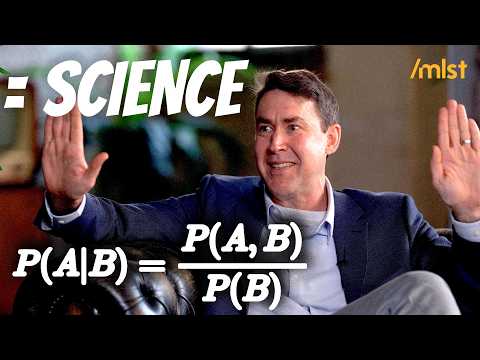
The Macro Transition: Moving from "Big Model" monoliths to "Lots of Little Models" where distributed Bayesian assets represent specific physical objects.
The Tactical Edge: Prioritize "Object-Centered" architectures that track uncertainty. This allows robots to "phone a friend" when encountering novel data.
The LLM era is hitting a wall of implicit representation. The next 12 months belong to those building explicit, causal world models grounded in physics rather than language.
The Macro Trend: The transition from static benchmarks to live human-in-the-loop evaluation. As models saturate fixed tests, the only remaining signal is subjective human preference at scale.
The Tactical Edge: Monitor secret model drops on Arena to spot frontier capabilities before official releases. This provides a lead time advantage for builders choosing their tech stack.
The Bottom Line: Arena is the new kingmaker. If you are building AI products, their expert-tier data is the most reliable map for navigating the frontier.
The move from small models to medium models (15B to 70B) suggests that reasoning capability is outstripping the desire for low-latency edge deployment.
Implement instruction-following re-rankers to prune your context window. This prevents the model from getting confused by irrelevant data.
Stop building toys. The next year belongs to those who can build full agentic systems that handle billions of tokens without losing the plot.
1. Despite short-term market volatility influenced by factors like tariff discussions, the underlying economy appears healthy, presenting a potentially bullish outlook for Bitcoin.
2. RWA and Trafi represent significant growth areas in crypto, but the rationale behind permissioned blockchains needs further examination.
3. AI continues to rapidly evolve, with vibe coding and localized LLMs poised to democratize app development and enhance user experiences.
1. While the current landscape for meme coins and certain trading strategies seems saturated, innovation and new implementations will drive the next wave of opportunities.
2. Macroeconomic forces, particularly institutional deleveraging, are significant drivers of recent market fluctuations, but long-term fundamentals remain strong for Bitcoin and select altcoins like Solana.
3. The convergence of AI and crypto holds immense potential, with orchestration playing a key role in unlocking value and efficiency across various applications.
1. ZK technology is essential for scaling verifiability and enabling privacy, which are critical for broader blockchain adoption.
2. The zkSync and EigenLayer partnership creates a synergistic combination of cryptographic and cryptoeconomic security, strengthening the ecosystem and ensuring greater resilience.
3. The implementation of EigenLayer's novel slashing mechanism enhances the security and trustworthiness of decentralized services, paving the way for a more robust and reliable decentralized future.