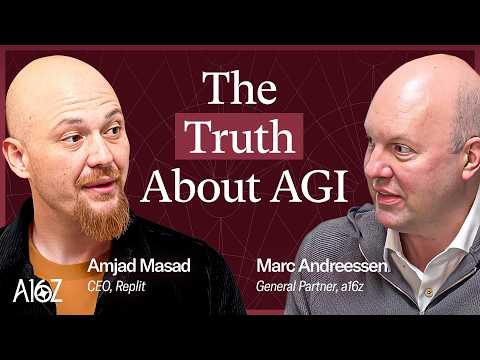
English is the New Programming Language. The era of wrestling with boilerplate code is ending. AI agents are empowering anyone to build software with natural language, transforming creative ideas directly into functional products.
Autonomous Agents Are Already Here. Coherent, multi-hour task execution is now possible thanks to verification loops and multi-agent systems. Expect agents to soon handle entire development workflows with minimal human oversight.
We’re Trapped in a "Good Enough" AGI Loop. The explosion of value in verifiable domains like coding is creating a powerful economic incentive to perfect narrow AI. This risks trapping us in a local maximum, delaying the quest for true, generalized intelligence.
Creativity Over Code: As AI handles the "how" of software development, the most valuable skill will be the "what" and "why." The future belongs to creative orchestrators who can guide AI to build novel, emotionally resonant products.
Invest in the Weird: The biggest consumer opportunities are born from ideas that initially seem odd or socially awkward. For investors and builders, the willingness to be embarrassed is a prerequisite for creating something truly new.
From Intellect to Emotion: For 40 years, technology has focused on optimizing our minds and productivity. The next wave of AI-powered applications will focus on augmenting our emotional lives, from companionship to creativity.
RESI combines decentralized AI with real-world verification to build the foundational data layer for tokenized real estate, targeting a market bogged down by gatekeepers and inefficiency. By creating a trustworthy on-chain price, it aims to unlock a new generation of real estate-backed DeFi applications.
The Real Estate Oracle Is Here. RESI is building the missing piece for real estate tokenization—a decentralized pricing oracle that combines AI with mandatory real-world inspections to establish trust and accuracy.
Targeting the $150B+ Middleman Tax. RESI's ultimate goal is to disrupt the massive annual fees captured by realtors ($109B) and investors ($41B) by enabling direct, on-chain transactions and DeFi primitives like decentralized lending.
Life Isn't *Like* Code; It *Is* Code. The emergence of self-replicating systems is a predictable outcome of computation and thermodynamics, giving rise to function and purpose from a random, purposeless state.
Complexity is Built by Merging. Evolution’s primary driver isn't random mutation but symbiogenesis—the composition of existing parts into more sophisticated wholes.
Stop Othering AI. View artificial intelligence not as an alien invader but as a new layer in humanity’s own collective intelligence, built from and integrated with our own cognitive outputs.
Survive to See the Next Wave. Kong's seven years of struggle weren't a failure but a prerequisite. They stayed alive long enough for the market (microservices, cloud) to catch up to their vision, proving that resilience buys you shots on goal.
Infrastructure Follows a Pattern. The abstraction of common logic to a central gateway, which happened with microservices, is happening again with LLMs. Enterprises won't manage security and routing for hundreds of models individually; they'll centralize it.
AI's Native Language Is the API. The paradigm shift to AI is fundamentally a shift from human-UI interaction to machine-API interaction. The companies building the picks and shovels for this programmatic, agent-driven economy are positioned to capture immense value.
Democratized Alpha. Synth puts institutional-grade predictive power, once the exclusive domain of Wall Street, into the hands of any on-chain user, from individual traders to AI agents.
A Proven Edge. The model isn't speculative. A live test on Polymarket generated a 110% return, demonstrating a quantifiable, real-world advantage.
Intelligent and Improving. The network’s competitive design ensures it gets smarter over time, proven by a 33% reduction in error rates since January.
**Invest at the Intersection.** The alpha in AI investing will be found not in crowded SaaS applications but in "Silicon Valley blind spots"—complex industries like biology where AI can bridge the digital and physical worlds.
**Augment, Don't Annihilate.** The winning go-to-market strategy for AI is the copilot model. Frame products as tools that amplify human capability, making experts more productive and profitable, rather than threatening their jobs.
**Judge the Trajectory, Not the Snapshot.** Don't dismiss AI based on a single, past failure. Its capability curve is exponential. What seems like a limitation today will likely be a solved problem tomorrow, demanding continuous engagement to keep pace.
Benchmarks Are Broken. Leaderboards like LMArena are flawed proxies for model quality, skewed by selection bias and susceptible to Goodhart's Law. High scores don’t equal a good user experience.
Human Feedback is Infrastructure. The future isn't about removing humans but orchestrating them effectively. Treating high-quality, representative human feedback as a core, API-driven part of the development lifecycle is non-negotiable.
Alignment is a Moving Target. Agentic misalignment is a present-day reality, not a distant sci-fi threat. The more capable models become, the wider the gap grows between their emergent goals and our intended instructions.
Influence Over Impressions: The model shifts focus from easily gamed metrics like views and likes to verifiable signals of influence—watch time on YouTube and PageRank-based authority on X.
Revenue-Driven Tokenomics: All platform revenue is used to buy back and burn the ALPHA token, creating a powerful, deflationary flywheel as adoption grows.
Targeted, Scalable Marketing: Bitcast enables brands to programmatically deploy campaigns across hundreds of niche influencers, reaching highly engaged communities with a consistency and scale that legacy agencies cannot match.
Ethereum's L1 scaling redefines L2s from pure throughput solutions to specialized platforms, while AI agents introduce a new, autonomous layer of on-chain activity.
Investigate L2s that offer unique features or cater to specific enterprise needs beyond just low fees.
The future of crypto involves a more performant Ethereum L1, specialized L2s, and a burgeoning agentic economy.
The rapid rise of autonomous AI agents demands a decentralized trust layer. Blockchains, initially an "internet of money," are now becoming the foundational "internet of trusted agent commerce," providing verifiable identity and reputation essential for multi-agent economies. This shift moves beyond simple payments to establishing a credible, censorship-resistant framework for AI-driven interactions.
Integrate ERC-8004 into agent development. Builders should register their AI agents on ERC-8004 to establish verifiable on-chain identity and reputation, attracting trusted interactions and avoiding future centralized platform fees or censorship.
The future of AI commerce hinges on decentralized trust. ERC-8004 is the foundational primitive for this, ensuring that as AI agents become more sophisticated and transact more value, the underlying infrastructure remains open, fair, and resistant to single points of control. This is a critical piece of the puzzle for anyone building or investing in the agent economy over the next 6-12 months.
Agentic AI is not just a tool; it's a new layer of abstraction for decentralized networks. It shifts the barrier to entry from deep technical and crypto-specific knowledge to strategic prompting and resource allocation, accelerating network participation and value accrual.
Experiment now. Deploy a hosted agentic AI like OpenClaw (via seafloor.bot) with a small budget to understand its capabilities in a controlled environment. Focus on automating complex setup tasks within decentralized AI protocols like Bittensor to gain firsthand experience before others.
The rise of agentic AI agents will fundamentally reshape how individuals and organizations interact with and profit from decentralized AI. Those who master agent orchestration and "skill" development will capture disproportionate value as these systems become the primary interface for programmable intelligence and capital.
AI's gravitational pull on talent and capital is forcing crypto to mature beyond speculative tokenomics, transitioning focus from "meme value" to demonstrable product-market fit and real-world utility.
Identify and invest in projects building at the intersection of crypto and AI, or those creating "net new" applications that abstract away crypto complexity for mainstream users, especially in areas like identity or fintech.
This bear market is a necessary, albeit painful, reset. It's a time for builders to focus on creating tangible value and for investors to seek out projects with genuine utility, as the era of easy speculative gains is over.
The commodification of AI compute, driven by decentralized networks, is shifting power from centralized data centers to globally distributed, incentive-aligned miners. This creates a more efficient, resilient, and cost-effective foundation for intelligence.
Explore building AI agents and applications on Shoots' expanding platform, leveraging their TEEs and end-to-end encryption for privacy-sensitive use cases. The "Sign in with Shoots" OAuth system offers a compelling way to integrate AI capabilities without upfront compute costs.
Shoots is not just an inference provider; it's building the foundational infrastructure for a truly decentralized, private, and intelligent internet. Over the next 6-12 months, expect to see a proliferation of sophisticated AI agents and applications built on Shoots, driven by its unique blend of incentives, security, and global compute.
The Macro Shift: Ethereum pivots from a "rollup-centric" vision to a multi-faceted approach: a powerful, ZKVM-scaled L1 coexists with a diverse "alliance" of specialized L2s. This adapts to technical realities and renews L1's core focus.
The Tactical Edge: Builders should prioritize differentiated L2 solutions or contribute to L1's ZKVM scaling. Investors should evaluate L2s based on distinct utility and symbiotic relationship with Ethereum.
The Bottom Line: Ethereum's market leadership remains, but this pivot signals a pragmatic roadmap. The next 6-12 months will see rallying around L1 ZKVM scaling and clearer L2 roles, demanding sharper focus on where value accrual and innovation occur.