The Macro Shift: Context management is the new compute. As models get smarter, the winning architecture will be the one that most efficiently partitions and feeds relevant data to sub-agents.
The Tactical Edge: Prioritize reviewability. When building or using agents, focus on tools that provide clear diffs and tours of changes rather than just raw code generation.
The Bottom Line: The developer's role is evolving from a writer to an orchestrator. Success in the next 12 months depends on mastering the skill of agentic review rather than manual syntax.
The Macro Shift: Engineering is moving from a headcount-driven Opex model to an infrastructure-driven autonomy model where validation is the primary capital asset.
The Tactical Edge: Audit your codebase against the eight pillars of automated validation. Start by asking agents to generate tests for existing logic to close the coverage gap.
The Bottom Line: Massive velocity gains are not found in the next model update. They are found in the rigorous internal standards that allow agents to operate without human hand-holding.
[Algorithmic Convergence]. The gap between symbolic logic and neural networks is closing through category theory. Expect architectures that are "correct by construction" rather than just "likely correct."
[Audit Architecture]. Evaluate new models based on their "algorithmic alignment" rather than just parameter count. Prioritize implementations that bake in non-invertible logic.
The next year will see a shift from scaling data to scaling structural priors. If you aren't thinking about how your model's architecture mirrors the problem's topology, you are just an alchemist in a world about to discover chemistry.
Strategic Implication: The future of software development isn't about *if* we use AI, but *how* we integrate human understanding and architectural discipline to prevent an "infinite software crisis.
Builder/Investor Note: Builders must prioritize deep system understanding and explicit planning over raw generation speed. Investors should favor companies that implement robust human-in-the-loop processes for AI-assisted development.
The "So What?": Over the next 6-12 months, the ability to "see the seams" and manage complexity will differentiate thriving engineering teams from those drowning in unmaintainable, AI-generated code.
Strategic Implication: The market for AI transformation services is expanding rapidly, driven by enterprises seeking to integrate AI for tangible business outcomes.
Builder/Investor Note: Focus on AI solutions with clear, practical applications for mid-market and enterprise clients. Technical talent capable of bridging research with deployment holds significant value.
The "So What?": The next 6-12 months will see increased demand for AI engineers who can implement and scale AI solutions, moving beyond proof-of-concept to widespread adoption.
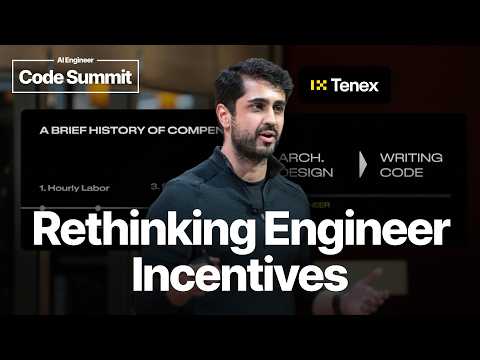
Compensation Innovation: The traditional compensation playbook for engineers is outdated. New models that directly reward AI-augmented output will attract top talent and drive efficiency.
Builder/Investor Note: Founders should re-evaluate their incentive structures. Investors should seek companies experimenting with these models, as they may achieve outsized productivity.
The "So What?": The productivity gap between AI-augmented and non-AI-augmented engineers will widen. Companies that adapt their incentives will capture disproportionate value in the next 6-12 months.
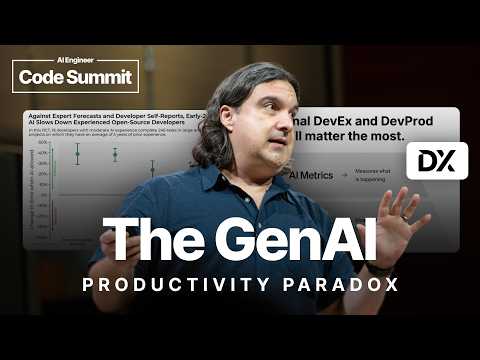
Strategic Shift: Successful AI integration means identifying and solving *your* organization's specific SDLC bottlenecks, not just boosting code completion.
Builder/Investor Note: Prioritize psychological safety and invest in AI skill development. For builders, this means dedicated learning time; for investors, look for companies that do this well.
The "So What?": The next 6-12 months will separate organizations that merely *adopt* AI from those that *master* its strategic application and measurement, driving real competitive advantage.
Strategic Implication: AI integration is a company-wide transformation, not a feature. Organizations must re-architect processes, tools, and culture to compete.
Builder/Investor Note: Prioritize internal tooling that democratizes AI experimentation. Look for companies establishing "model behavior" as a distinct, cross-functional discipline.
The "So What?": The next 6-12 months will reward builders who bake AI security and user control into product design from day one, recognizing that technical mitigations alone are insufficient.
Ethereum's L1 scaling redefines L2s from pure throughput solutions to specialized platforms, while AI agents introduce a new, autonomous layer of on-chain activity.
Investigate L2s that offer unique features or cater to specific enterprise needs beyond just low fees.
The future of crypto involves a more performant Ethereum L1, specialized L2s, and a burgeoning agentic economy.
The rapid rise of autonomous AI agents demands a decentralized trust layer. Blockchains, initially an "internet of money," are now becoming the foundational "internet of trusted agent commerce," providing verifiable identity and reputation essential for multi-agent economies. This shift moves beyond simple payments to establishing a credible, censorship-resistant framework for AI-driven interactions.
Integrate ERC-8004 into agent development. Builders should register their AI agents on ERC-8004 to establish verifiable on-chain identity and reputation, attracting trusted interactions and avoiding future centralized platform fees or censorship.
The future of AI commerce hinges on decentralized trust. ERC-8004 is the foundational primitive for this, ensuring that as AI agents become more sophisticated and transact more value, the underlying infrastructure remains open, fair, and resistant to single points of control. This is a critical piece of the puzzle for anyone building or investing in the agent economy over the next 6-12 months.
Agentic AI is not just a tool; it's a new layer of abstraction for decentralized networks. It shifts the barrier to entry from deep technical and crypto-specific knowledge to strategic prompting and resource allocation, accelerating network participation and value accrual.
Experiment now. Deploy a hosted agentic AI like OpenClaw (via seafloor.bot) with a small budget to understand its capabilities in a controlled environment. Focus on automating complex setup tasks within decentralized AI protocols like Bittensor to gain firsthand experience before others.
The rise of agentic AI agents will fundamentally reshape how individuals and organizations interact with and profit from decentralized AI. Those who master agent orchestration and "skill" development will capture disproportionate value as these systems become the primary interface for programmable intelligence and capital.
AI's gravitational pull on talent and capital is forcing crypto to mature beyond speculative tokenomics, transitioning focus from "meme value" to demonstrable product-market fit and real-world utility.
Identify and invest in projects building at the intersection of crypto and AI, or those creating "net new" applications that abstract away crypto complexity for mainstream users, especially in areas like identity or fintech.
This bear market is a necessary, albeit painful, reset. It's a time for builders to focus on creating tangible value and for investors to seek out projects with genuine utility, as the era of easy speculative gains is over.
The commodification of AI compute, driven by decentralized networks, is shifting power from centralized data centers to globally distributed, incentive-aligned miners. This creates a more efficient, resilient, and cost-effective foundation for intelligence.
Explore building AI agents and applications on Shoots' expanding platform, leveraging their TEEs and end-to-end encryption for privacy-sensitive use cases. The "Sign in with Shoots" OAuth system offers a compelling way to integrate AI capabilities without upfront compute costs.
Shoots is not just an inference provider; it's building the foundational infrastructure for a truly decentralized, private, and intelligent internet. Over the next 6-12 months, expect to see a proliferation of sophisticated AI agents and applications built on Shoots, driven by its unique blend of incentives, security, and global compute.
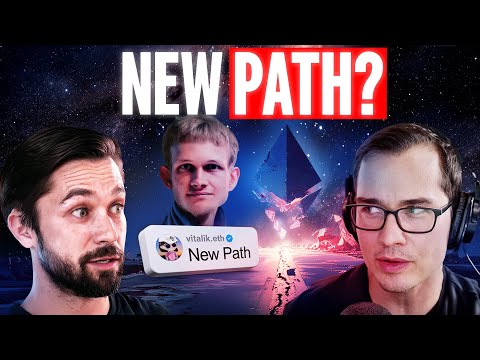
The Macro Shift: Ethereum pivots from a "rollup-centric" vision to a multi-faceted approach: a powerful, ZKVM-scaled L1 coexists with a diverse "alliance" of specialized L2s. This adapts to technical realities and renews L1's core focus.
The Tactical Edge: Builders should prioritize differentiated L2 solutions or contribute to L1's ZKVM scaling. Investors should evaluate L2s based on distinct utility and symbiotic relationship with Ethereum.
The Bottom Line: Ethereum's market leadership remains, but this pivot signals a pragmatic roadmap. The next 6-12 months will see rallying around L1 ZKVM scaling and clearer L2 roles, demanding sharper focus on where value accrual and innovation occur.