The Macro Shift: Scaling laws are hitting a diminishing return on raw data but a massive acceleration in reasoning. The shift from statistical matching to reasoning agents happens when models can recursively check their own logic.
The Tactical Edge: Build for the agentic future by prioritizing high-context data pipelines. Models perform better when you provide massive context rather than relying on zero-shot inference.
The Bottom Line: We are 24 months away from AI that makes unassisted human thought look like navigating London without a map. Prepare for a world where the most valuable skill is directing machine agency rather than performing manual logic.
The transition from model-centric to loop-centric development. Performance is now a function of the feedback cycle rather than just the weights of the frontier model.
Implement an LLM-as-a-judge step that outputs a "Reason for Failure" field. Feed this string directly into a meta-prompt to update your agent's system instructions automatically.
Static prompts are technical debt. Teams that build automated systems to iterate on their agent's instructions will outpace those waiting for the next model training run.
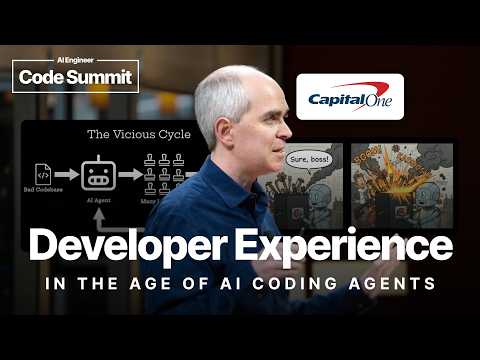
The Macro Shift: The transition from writing to reviewing as the primary engineering activity. As agents generate more code, the human role moves from creator to editor.
The Tactical Edge: Build CLIs for every internal tool to give agents a native text interface. This increases accuracy and speed compared to visual automation.
The Bottom Line: Developer experience is the infrastructure for AI. Investing in clean code and fast feedback loops is the only way to ensure AI productivity gains do not decay over the next 12 months.
The Capability-Productivity Gap. We are entering a period where model intelligence outpaces our ability to integrate it into high stakes production.
Audit your stack. Identify tasks where "good enough" generation is a win versus high context tasks where AI is currently a net negative.
Do not mistake a climbing benchmark for a finished product. For the next year, the biggest wins are not in smarter models but in better verification loops.
The transition from simple Large Language Models to Reasoning Models marks the end of the stochastic parrot era.
Build agentic workflows that utilize high-context windows for recursive problem solving.
We are moving toward a world where intelligence is a commodity. Your value will shift from knowing things to directing outcomes over the next 12 months.
The Macro Pivot: Agentic Abstraction. As the cost of logic hits zero, the value of a developer moves from how to build to what to build.
The Tactical Edge: Adopt Orchestrators. Replace your standard editor with agent-first platforms today to learn the art of directing sub-agents before the 2026 deadline.
The Bottom Line: The next 12 months will reward those who stop writing code and start building the systems that write it for them.
The Macro Movement: The Token Deflation. As compute becomes a commodity, the value of the "Human-in-the-Loop" moves from production to architectural oversight.
The Tactical Edge: Implement Code Maps. Use AI to index and understand your entire repository to ensure every generated line aligns with existing logic.
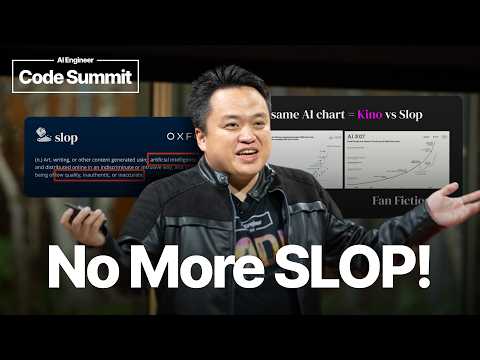
The Bottom Line: The next year belongs to the "Taste-Driven Developer." If you optimize for volume, you produce slop; if you optimize for accountability, you build a moat.
The Macro Shift: Software development is moving from human-led logic to agent-led verification.
The Tactical Edge: Use sub-agents to isolate testing from creation to prevent context pollution.
The Bottom Line: The technical barrier is evaporating. In the next 12 months, the winning platforms will be those that require the fewest technical decisions from the user.
Ethereum's L1 scaling redefines L2s from pure throughput solutions to specialized platforms, while AI agents introduce a new, autonomous layer of on-chain activity.
Investigate L2s that offer unique features or cater to specific enterprise needs beyond just low fees.
The future of crypto involves a more performant Ethereum L1, specialized L2s, and a burgeoning agentic economy.
The rapid rise of autonomous AI agents demands a decentralized trust layer. Blockchains, initially an "internet of money," are now becoming the foundational "internet of trusted agent commerce," providing verifiable identity and reputation essential for multi-agent economies. This shift moves beyond simple payments to establishing a credible, censorship-resistant framework for AI-driven interactions.
Integrate ERC-8004 into agent development. Builders should register their AI agents on ERC-8004 to establish verifiable on-chain identity and reputation, attracting trusted interactions and avoiding future centralized platform fees or censorship.
The future of AI commerce hinges on decentralized trust. ERC-8004 is the foundational primitive for this, ensuring that as AI agents become more sophisticated and transact more value, the underlying infrastructure remains open, fair, and resistant to single points of control. This is a critical piece of the puzzle for anyone building or investing in the agent economy over the next 6-12 months.
Agentic AI is not just a tool; it's a new layer of abstraction for decentralized networks. It shifts the barrier to entry from deep technical and crypto-specific knowledge to strategic prompting and resource allocation, accelerating network participation and value accrual.
Experiment now. Deploy a hosted agentic AI like OpenClaw (via seafloor.bot) with a small budget to understand its capabilities in a controlled environment. Focus on automating complex setup tasks within decentralized AI protocols like Bittensor to gain firsthand experience before others.
The rise of agentic AI agents will fundamentally reshape how individuals and organizations interact with and profit from decentralized AI. Those who master agent orchestration and "skill" development will capture disproportionate value as these systems become the primary interface for programmable intelligence and capital.
AI's gravitational pull on talent and capital is forcing crypto to mature beyond speculative tokenomics, transitioning focus from "meme value" to demonstrable product-market fit and real-world utility.
Identify and invest in projects building at the intersection of crypto and AI, or those creating "net new" applications that abstract away crypto complexity for mainstream users, especially in areas like identity or fintech.
This bear market is a necessary, albeit painful, reset. It's a time for builders to focus on creating tangible value and for investors to seek out projects with genuine utility, as the era of easy speculative gains is over.
The commodification of AI compute, driven by decentralized networks, is shifting power from centralized data centers to globally distributed, incentive-aligned miners. This creates a more efficient, resilient, and cost-effective foundation for intelligence.
Explore building AI agents and applications on Shoots' expanding platform, leveraging their TEEs and end-to-end encryption for privacy-sensitive use cases. The "Sign in with Shoots" OAuth system offers a compelling way to integrate AI capabilities without upfront compute costs.
Shoots is not just an inference provider; it's building the foundational infrastructure for a truly decentralized, private, and intelligent internet. Over the next 6-12 months, expect to see a proliferation of sophisticated AI agents and applications built on Shoots, driven by its unique blend of incentives, security, and global compute.
The Macro Shift: Ethereum pivots from a "rollup-centric" vision to a multi-faceted approach: a powerful, ZKVM-scaled L1 coexists with a diverse "alliance" of specialized L2s. This adapts to technical realities and renews L1's core focus.
The Tactical Edge: Builders should prioritize differentiated L2 solutions or contribute to L1's ZKVM scaling. Investors should evaluate L2s based on distinct utility and symbiotic relationship with Ethereum.
The Bottom Line: Ethereum's market leadership remains, but this pivot signals a pragmatic roadmap. The next 6-12 months will see rallying around L1 ZKVM scaling and clearer L2 roles, demanding sharper focus on where value accrual and innovation occur.