Intent Over Implementation: The value in software creation shifts from low-level coding to clearly defining intent and design, with AI handling the technical execution.
Rapid Prototyping: Builders can now rapidly prototype and deploy complex, full-stack applications, significantly compressing development cycles and lowering entry barriers.
New Creator Economy: Expect a surge in non-technical creators building sophisticated applications, driving innovation in UI/UX and personalized content.
Strategic Shift: The "factory-first" mindset is a strategic reorientation towards physical production, enabled by AI, extending beyond traditional manufacturing to all large-scale infrastructure.
Builder/Investor Note: Focus on companies applying modular design, AI-driven process optimization, and automation to sectors like housing, energy, and mining. Data centers are a leading indicator for these trends.
The "So What?": Rebuilding America's industrial capacity through these methods offers a competitive advantage, impacting defense, consumer goods, and commercial sectors in the next 6-12 months.
Strategic Implication: The future of AI agents hinges on practical utility and adaptive reasoning, not just raw scale. Models that integrate expert feedback and iterative thinking will outperform those focused solely on benchmarks.
Builder/Investor Note: Builders should prioritize robust generalization through diverse training perturbations. Investors should seek models that demonstrate real-world adoption and cost-effective scalability for multi-agent architectures.
The So What?: The next 6-12 months will see a shift towards smaller, highly specialized, and deeply integrated AI models that function as reliable co-workers, driving efficiency in developer workflows and complex agentic tasks.
Strategic Shift: The industry is moving from code generation to code orchestration. The value lies in guiding AI, not just prompting it.
Builder/Investor Note: Invest in tools that enhance "vibe engineering" (real-time steering, context management) and education for senior developers. Avoid strategies that solely rely on AI to replace junior talent without skilled oversight.
The "So What?": Over the next 6-12 months, the ability to effectively "vibe engineer" will become a critical differentiator, separating high-performing teams from those drowning in AI-generated "slop."
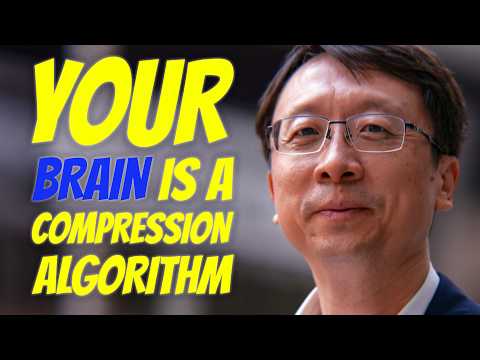
Strategic Implication: The next frontier in AI involves a fundamental shift from statistical compression to genuine abstraction and understanding.
Builder/Investor Note: Focus on research and development that grounds AI in first principles, leading to more robust, efficient, and interpretable systems, rather than solely scaling existing empirical architectures.
The "So What?": The pursuit of mathematically derived, parsimonious, and self-consistent AI architectures offers a path to overcome current limitations, enabling systems that truly learn, adapt, and reason in the next 6-12 months and beyond.
Data Scarcity is a Feature, Not a Bug: Be wary of narratives built on incomplete data. Just because a dataset (on-chain, AI training) is all we have, doesn't mean it's representative.
Standardization is Survival: For any new technology (crypto protocols, AI models), robust "lexicography" and clear documentation are critical for long-term adoption and preventing fragmentation.
Question the "Received Law": Don't assume current "archaeological evidence" (e.g., current blockchain data, AI model limitations) tells the whole story. Look for the "perishable materials" that might be missing.
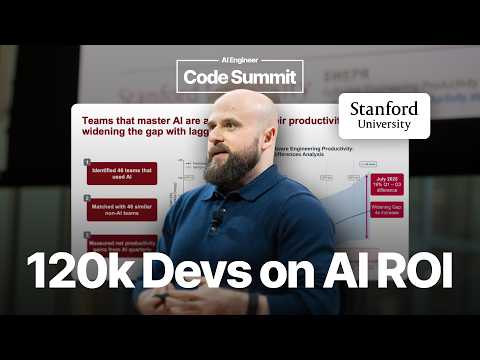
Strategic Shift: AI ROI isn't about adoption, it's about intelligent adoption. The gap between top and bottom performers will widen based on measurement sophistication and codebase health.
Builder/Investor Note: For builders, prioritize codebase hygiene and engineer training before or concurrently with AI rollout. For investors, scrutinize AI productivity claims; ask about code quality, rework rates, and specific measurement frameworks beyond simple usage.
The "So What?": In the next 6-12 months, companies that master AI integration by focusing on quality, measurement, and environment will compound their gains, while those chasing superficial metrics risk significant tech debt and negative ROI.
Strategic Implication: The next frontier of AI in software isn't just *generating* code, but *governing* its quality. This shift will redefine competitive advantage.
Builder/Investor Note: Prioritize investments in AI-powered quality gates, intelligent code review, and dynamic testing. For builders, feed your AI tools rich, comprehensive context. For investors, look for companies building these "picks and shovels."
The "So What?": The promised 2x-10x productivity gains are real, but they won't come from raw code generation alone. The next 6-12 months will see a scramble to implement agentic, context-aware quality workflows to unlock AI's true potential across the SDLC.
Strategic Shift: The competitive edge in AI agents is moving from clever architecture to superior model training data and robust RL environments.
Builder/Investor Note: Prioritize raw model capability over complex agent stacks. Builders should contribute to open-source RL environments; investors should seek companies focused on generating and leveraging high-quality training data.
The "So What?": The next 6-12 months will see a race to build and utilize real-world, outcome-driven benchmarks. Open initiatives like Client Bench could democratize model improvement and accelerate AI development significantly.
Buy the Fear (Selectively): Target Bitcoin dips aggressively in the $73k-$78k zone for mid-term holds, anticipating a potential reversal once tariff fears subside.
Short the Weakness: Ethereum presents a compelling short opportunity targeting $1500 or lower; most altcoins remain vulnerable until market sentiment improves.
Trade Nimbly, Hedge Wisely: This market rewards quick profit-taking on bounces and punishing overstayed welcomes. Use put options to hedge against unpredictable downside moves in this "once-in-80-year" tariff scenario.
Brace for Impact, Watch for Stimulus: Tariffs likely guarantee short-term economic pain and recession risk, but expect swift policy responses (tax cuts) if things get too dire.
Bitcoin > Alts (Mostly): Prioritize Bitcoin exposure due to relative strength. Altcoins (especially ETH) face severe headwinds; shorting weak names is viable. Keep an eye on the RWA narrative.
Trade the Extremes: Volatility is the game. Buy deep fear ($73-78k BTC zone), sell rips quickly, stay nimble, and don't overexpose yourself without hedges.
Finance is Moving On-Chain: The future isn't siloed databases using the internet for messaging; it's financial ledgers living on unified, open-access blockchains – the true Internet Financial System.
Strong Property Rights, Stronger Economies: Blockchains provide globally accessible, technologically enforced property rights, bypassing weak local legal systems and unlocking trillions in capital – a massive driver for global development.
Crypto Grows Up: The era of pure speculation and inert protocols is fading; sustainable businesses, real cash flows, and robust token holder rights are the new requirements for success and investment.
Timelines are Fluid Until Scheduled: Don't treat estimated Ethereum upgrade windows discussed early in development as hard deadlines; "delays" only truly occur after a specific date is set and missed.
Communication is Hard: Core developers wrestle with how much certainty to project about timelines, balancing the need for transparency against the risks of premature commitment or unhelpful vagueness.
Manage Expectations: Observers and investors should factor the inherent uncertainty of deep R&D into their expectations regarding Ethereum upgrade timelines.
**Meme Coins Persist:** Pump.fun's combined volume nears ATHs post-Pump Swap launch; the game evolves, integrating social features (Zora) and platform revenue sharing, rather than disappearing.
**Fees Aren't Everything:** Tron's high network fees mask an application-light ecosystem heavily reliant on CEX USDT flows, unlike Solana's more balanced app/chain fee structure.
**Stablecoin Yield Ban Reshapes Market:** No native yield benefits incumbent issuers (Circle/Tether) and potentially DeFi, pushing yield generation to adjacent protocols and complicating the 'stablecoins fund US debt' narrative.
Zora is pioneering a shift from illiquid NFTs to fungible content coins, creating liquid markets around individual pieces of online media. This model aims to empower the long tail of creators and build a more open, composable, and value-aligned internet economy beyond ads and subscriptions.
**Content is Fungible:** The market realized many NFTs were traded fungibly; coins offer a more efficient market structure for most online content.
**Attention Markets Emerge:** Crypto enables open markets to price the attention and cultural relevance of content, moving beyond ad exchanges.
**Simplified Creator Monetization:** Zora provides tools for creators to easily tokenize content and earn directly via integrated market mechanisms (LP fees), often surpassing earnings on traditional platforms.