Demand for provably correct systems in hardware, software, and critical infrastructure creates a massive market for formal verification. AI scales these human-bottlenecked processes.
Investigate formal verification tools for high-stakes codebases or chip designs. Prioritize solutions combining probabilistic generation with deterministic proof for speed and reliability.
"Good enough" code is ending for critical applications. AI-driven formal verification is a commercial imperative, redefining development cycles and trust.
The macro shift: Geopolitical competition in AI is not just about raw model power; it is about who controls the foundational research and development platforms. Open models are the battleground for long-term national AI sovereignty.
The tactical edge: Invest in open model research and infrastructure, particularly in post-training environments and high-quality data generation. This builds a resilient, transparent AI ecosystem that can adapt and innovate independently.
The bottom line: The US must prioritize open model development now to secure its position as a global AI leader, foster domestic innovation, and provide accessible AI options for a diverse global user base over the next 6-12 months.
The convergence of AI and immersive computing is pushing towards a "HoloDeck" future. Roblox's vector-based data storage of 13 billion monthly hours provides unprecedented training data for agentic NPCs and real-time world generation, fundamentally changing how virtual worlds are built and experienced.
Invest in platforms that offer cloud-native, AI-accelerated creation tools and robust multiplayer synchronization. Prioritize those building on rich, proprietary 3D interaction data for superior AI agent training.
The future of digital interaction is 4D, photorealistic, and AI-driven. Companies with a clear, long-term vision paired with rapid, cloud-connected iteration will capture the next wave of virtual co-experience, making them prime targets for investment and partnership over the next 6-12 months.
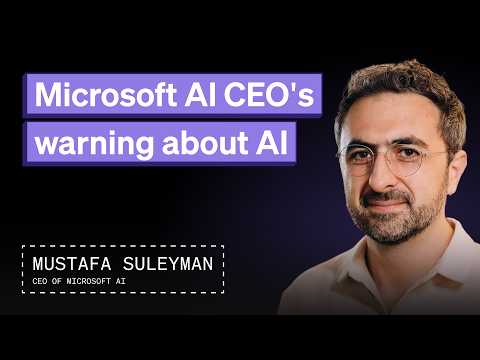
The exponential reduction in the cost of intelligence is transforming AI from a mere tool into a "hyperobject" with quasi-human capabilities, forcing society to adapt from a scarcity-based operating system to one of intelligence abundance.
Cultivate "AI muscle" by actively experimenting with AI tools, understanding their capabilities and limitations, and pushing their boundaries. This hands-on engagement is the best inoculation against "AI psychosis" and prepares you for a world where AI is ubiquitous.
AI's rapid proliferation and increasing autonomy demand immediate, collective action from governments, companies, and individuals to establish clear boundaries and ensure human control. Ignoring this "fourth class" of being risks societal instability and the erosion of human agency over the next 6-12 months.
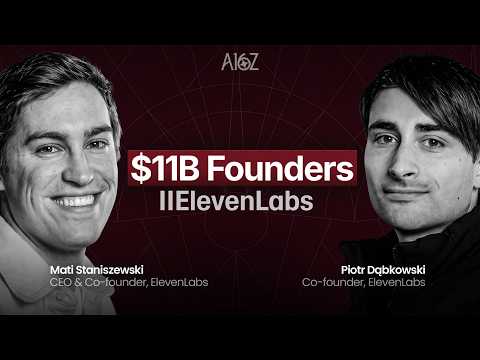
The computing paradigm is shifting from visual-centric to auditory-first, driven by AI's ability to process raw audio data for emotional depth and contextual understanding. This opens new frontiers for immersive experiences and global communication.
Invest in or build solutions that prioritize raw audio data processing and multimodal AI integration. Focus on applications where emotional nuance and natural interaction create a distinct user experience.
Voice AI, particularly with ElevenLabs' approach to emotional intelligence, is not just an incremental improvement; it is a foundational shift that will redefine human-computer interaction and unlock massive markets in education, entertainment, and global connectivity over the next 6-12 months.
AI's memory demands invert data center design, moving from storage-first to memory-first. High-speed networks and NVMe flash are now core memory tiers.
Fund software-defined memory solutions like WEKA's Axon and Augmented Memory Grid. These convert existing NVMe drives into high-performance context memory.
Persistent, rapid KV cache access through "Token Warehouses" will determine AI application and agent deployment profitability over the next 6-12 months.
AI is moving from opaque, data-driven systems to transparent, intentionally designed agents. This shift is driven by the need for reliability, safety, and the ability to extract novel insights from increasingly powerful models.
Invest in tools and research that provide granular control over AI internals, like Goodfire's platform. This enables precise customization, reduces unintended behaviors, and accelerates scientific discovery in critical domains.
The future of AI isn't just about bigger models; it's about smarter, more controllable ones. Understanding and directly influencing AI's "mind" will be a competitive differentiator and a prerequisite for deploying AI in high-stakes, real-world applications over the next 6-12 months.
The era of "good enough" probabilistic AI for critical systems is ending; the market demands provable correctness. Axiom Math's approach signals a return to formal methods, supercharged by AI, addressing the verification bottleneck in software and hardware.
Investigate formal verification tools for safety-critical code generation, hardware design, and legacy code migration. Prioritize solutions combining AI generation with deterministic proof for speed and certainty.
Formally verifying complex systems with AI will redefine trust in software and hardware. Companies integrating these capabilities gain a competitive advantage, reducing bugs, accelerating development, and meeting regulatory demands over the next 6-12 months.
The scaling laws seen in large language and video models are now extending to physical robotics. Internet-scale human video data, combined with humanoid morphology, is creating a new paradigm for robot generalization.
Invest in or build systems that prioritize multi-stage data pipelines, especially those incorporating diverse egocentric data. This approach is proving key to unlocking zero-shot capabilities in physical AI.
World models are not just a research curiosity; they are a practical tool for accelerating robot deployment. Their ability to generalize and act as learned simulators will redefine how robots are trained, tested, and ultimately integrated into our daily lives over the next 6-12 months.
**Watch IBIT/SPY:** A breakout above 0.1 in the IBIT/SPY ratio could signal Bitcoin decoupling and trigger major capital inflows.
**Bitcoin > Gold (Long Term):** Bitcoin offers a superior potential upside (5-10x) compared to gold (2x) over the next decade, though its path will be far more volatile.
**Diversify with Gold:** Adding gold can stabilize a portfolio (higher Sharpe), enabling investors to potentially hold larger, more volatile Bitcoin positions for long-term gains.
Dual Strategy is Key: Plasma Chain attacks the market from both the crypto-native angle (liquidity, devs) and a targeted "ground game" (local payment integration).
Targeted Regional Rollout: Specific markets like South America (El Salvador, Argentina) and Turkey are prioritized for initial real-world integration efforts.
Quality Beats Quantity: Ecosystem success is measured by the value of a few core protocols, not the sheer number of deployed applications day one.
**User Experience Trumps TPS:** Sonic prioritizes smooth, responsive interactions and sub-second finality over chasing headline transaction-per-second numbers.
**Solving Onboarding is the Killer App:** Native account and gas abstraction aim to eliminate the wallet/gas friction that plagues crypto adoption, combined with 90% fee share making Sonic attractive for builders.
**The Future is Invisible:** Sonic's 2026 goal is to make the underlying blockchain utterly seamless and invisible to the end user, enabling the next wave of Web3 applications in gaming, social, and beyond.
Trade the Edges, Hold the Cash: In this high-volatility chop-fest, avoid the middle ground. Take profits (20-50%) and keep powder dry for inevitable dislocations and extreme lows.
Bet on Real Yield & Value Accrual: Prioritize projects like Hyperliquid that generate revenue and return value to tokens. Consider pair trades (long RWA/short ETH) to bet on promising sectors without full market exposure.
Macro Shift Fuels Long-Term Bull: Geopolitical realignment (US/China, multipolarity) creates short-term chaos but potentially fuels a decade-long run for alternative reserve assets like Gold and especially Bitcoin. Brace for volatility, but position for the long game.
No Charter, Still Connected: Robinhood operates without a banking charter but strategically uses bank partnerships, highlighting a hybrid approach.
Fiat Bridge: Crypto's mainstream adoption currently depends heavily on traditional banks acting as the crucial fiat-to-crypto gateway.
Converging Future: Expect greater integration between TradFi and crypto, spurred by regulatory clarity and the potential emergence of specialized "crypto banks."
Institutions Aren't Degens: They bring long-term capital, changing market cycles and focusing on foundational assets or tokenizing their own.
Tokenize Everything: Future growth hinges on bringing RWAs on-chain, starting with liquid yield assets before tackling illiquidity.
Infrastructure is the Bottleneck (and Opportunity): Building compliant, robust, and well-capitalized trading infrastructure like Flowdesk's is critical, but increasingly difficult, creating moats for established players.