The Macro Shift: Scaling laws are hitting a diminishing return on raw data but a massive acceleration in reasoning. The shift from statistical matching to reasoning agents happens when models can recursively check their own logic.
The Tactical Edge: Build for the agentic future by prioritizing high-context data pipelines. Models perform better when you provide massive context rather than relying on zero-shot inference.
The Bottom Line: We are 24 months away from AI that makes unassisted human thought look like navigating London without a map. Prepare for a world where the most valuable skill is directing machine agency rather than performing manual logic.
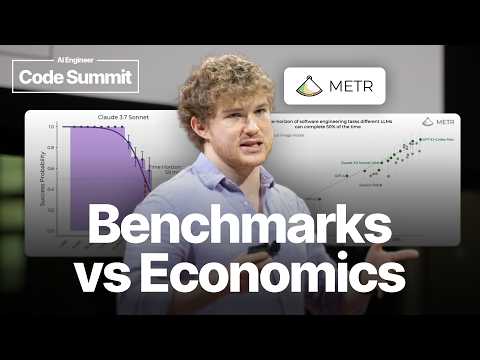
The transition from model-centric to loop-centric development. Performance is now a function of the feedback cycle rather than just the weights of the frontier model.
Implement an LLM-as-a-judge step that outputs a "Reason for Failure" field. Feed this string directly into a meta-prompt to update your agent's system instructions automatically.
Static prompts are technical debt. Teams that build automated systems to iterate on their agent's instructions will outpace those waiting for the next model training run.
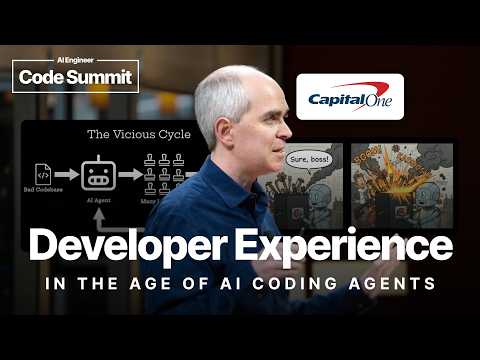
The Macro Shift: The transition from writing to reviewing as the primary engineering activity. As agents generate more code, the human role moves from creator to editor.
The Tactical Edge: Build CLIs for every internal tool to give agents a native text interface. This increases accuracy and speed compared to visual automation.
The Bottom Line: Developer experience is the infrastructure for AI. Investing in clean code and fast feedback loops is the only way to ensure AI productivity gains do not decay over the next 12 months.
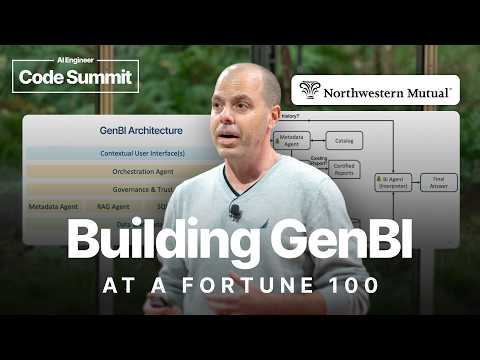
The Capability-Productivity Gap. We are entering a period where model intelligence outpaces our ability to integrate it into high stakes production.
Audit your stack. Identify tasks where "good enough" generation is a win versus high context tasks where AI is currently a net negative.
Do not mistake a climbing benchmark for a finished product. For the next year, the biggest wins are not in smarter models but in better verification loops.
The transition from simple Large Language Models to Reasoning Models marks the end of the stochastic parrot era.
Build agentic workflows that utilize high-context windows for recursive problem solving.
We are moving toward a world where intelligence is a commodity. Your value will shift from knowing things to directing outcomes over the next 12 months.
The Macro Pivot: Agentic Abstraction. As the cost of logic hits zero, the value of a developer moves from how to build to what to build.
The Tactical Edge: Adopt Orchestrators. Replace your standard editor with agent-first platforms today to learn the art of directing sub-agents before the 2026 deadline.
The Bottom Line: The next 12 months will reward those who stop writing code and start building the systems that write it for them.
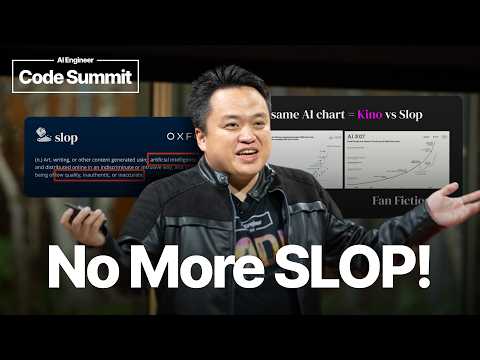
The Macro Movement: The Token Deflation. As compute becomes a commodity, the value of the "Human-in-the-Loop" moves from production to architectural oversight.
The Tactical Edge: Implement Code Maps. Use AI to index and understand your entire repository to ensure every generated line aligns with existing logic.
The Bottom Line: The next year belongs to the "Taste-Driven Developer." If you optimize for volume, you produce slop; if you optimize for accountability, you build a moat.
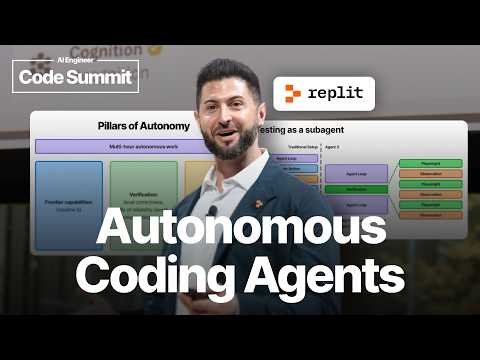
The Macro Shift: Software development is moving from human-led logic to agent-led verification.
The Tactical Edge: Use sub-agents to isolate testing from creation to prevent context pollution.
The Bottom Line: The technical barrier is evaporating. In the next 12 months, the winning platforms will be those that require the fewest technical decisions from the user.
The Macro Shift: Institutional players are not just buying crypto; they are actively building and acquiring talent to integrate blockchain rails into existing financial infrastructure. This means the battle for crypto's future will increasingly be fought on the grounds of productization and distribution, not just raw technical innovation.
The Tactical Edge: Investigate projects that are actively bridging the gap between open-source crypto and traditional finance, but with clear, transparent tokenomics and governance structures. Prioritize teams willing to disclose financials, as this signals long-term viability and investor alignment in a market often opaque.
The Bottom Line: The next cycle will see a fierce competition between truly decentralized protocols and corporate-backed, crypto-native products. Understanding who owns the rails and how value accrues will be paramount for investors and builders seeking to capitalize on this evolving landscape.
The global financial system is undergoing a fundamental shift towards tokenized money, driven by efficiency gains and demand for dollar access in emerging markets. This transition will upgrade core payment rails, not just add layers.
Builders should focus on infrastructure that collapses existing financial stacks, leveraging stablecoins for global reach and capital efficiency. Investors should seek companies enabling this "under the surface" upgrade, particularly those with direct network memberships.
The future of finance is programmable and global. Companies like Rain, by building core stablecoin infrastructure and securing direct network access, are positioned to capture immense value as more of the world's money moves onchain over the next 6-12 months.
The crypto industry is experiencing a gravitational pull towards institutionalization, where traditional finance and tech giants are increasingly building on or acquiring web3 infrastructure and talent.
Monitor projects like MegaETH that are launching with clear, measurable KPIs for their token generation events.
The next 6-12 months will see increased competition from well-capitalized, traditional players building on crypto rails, potentially limiting direct token exposure to fundamental infrastructure plays.
The Ethereum scaling narrative is evolving from L2s as mere L1 extensions to specialized, high-performance execution layers. This creates a barbell structure where Ethereum provides core security, and L2s deliver extreme throughput and novel features.
Builders should explore high-performance L2s like MegaETH for applications requiring ultra-low latency and high transaction volumes, especially in gaming, DeFi, and AI agent interactions, where traditional fee models are prohibitive.
MegaETH's mainnet launch, with its technical innovations and unconventional economic and app strategies, signals a new generation of L2s.
The theoretical certainty of quantum computing, coupled with accelerating engineering breakthroughs, means the digital asset space must proactively build "crypto agility" into its core protocols. This ensures systems can adapt to new cryptographic standards as current ones become obsolete.
Secure your Bitcoin by ensuring it resides in unspent SegWit or P2SH addresses, as these keep your public key hidden until spent. This provides a temporary shield against quantum attacks.
Quantum computing is not a distant threat but a near-term risk with a 20% chance of moving Satoshi's coins by 2030. Ignoring this could lead to a systemic collapse of the "store of value" narrative for Bitcoin and other digital assets, forcing a costly and painful reset.
The crypto industry must shift from viewing quantum as a distant threat to an imminent engineering challenge requiring proactive, coordinated defense.
Ensure any long-term Bitcoin holdings are in SegWit addresses never spent from, as these public keys remain hashed and are currently more resistant to quantum attacks.
A 20% chance of Satoshi's coins moving by 2030, and near certainty by 2035, means delaying upgrades is a multi-billion dollar bet against Bitcoin's core security narrative.