The Macro Shift: Agentic Abstraction. We are moving from Model-as-a-Service to Agent-as-a-Service where the harness is as important as the weights.
The Tactical Edge: Standardize your CLI. Use tools like ripgrep (RG) that models already have "habits" for to see immediate performance gains.
The Bottom Line: The next 12 months will see the end of manual integration engineering as agents become capable of navigating UIs and legacy terminals autonomously.
The commoditization of syntax means architectural judgment is the only remaining moat. As the cost of code hits zero the value of intent skyrockets.
Replace your manual refactoring workflows with a burn and rebuild strategy. Use agents to generate entirely new modules instead of patching old ones.
Seniority is no longer a shield against obsolescence. You must spend the next six months building your agentic intuition or risk being replaced by a PhD student with a prompt.
The Macro Evolution: Standardized communication layers are replacing custom API integrations. This commoditizes the connector market and moves value to the models that best utilize these tools.
The Tactical Edge: Standardize your internal data tools using MCP servers today. This ensures your company is ready for autonomous agents that can discover and use your resources without manual API integration.
The Bottom Line: The agentic stack is consolidating around MCP. Interoperability is no longer a feature; it is the foundation for the next decade of AI utility.
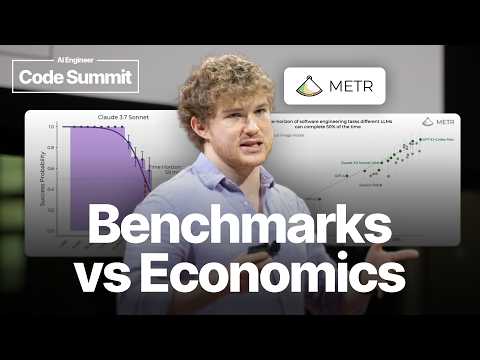
The Macro Shift: From Model-Centric to Eval-Centric. The value is moving from the LLM itself to the proprietary evaluation loops that keep the LLM on the rails.
The Tactical Edge: Export production traces and build a "Golden Set" of 50 hard examples. Use these to run A/B tests on every prompt change before hitting production.
The Bottom Line: Reliability is the product. If you cannot measure how your agent fails, you haven't built a product; you've built a demo.
The transition from chatbots with tools to agents that build tools marks the end of the manual integration era.
Stop building custom model scaffolding and start building on top of opinionated agent layers like the Codex SDK.
In 12 months, the distinction between a coding agent and a general computer user will vanish as the terminal becomes the primary interface for all digital labor.
The Capability-Utility Gap is widening. We see a divergence where models get smarter but the friction of human-AI collaboration keeps productivity flat.
Deploy AI for mid-level engineers or low-context tasks. Avoid forcing AI workflows on your top seniors working in complex legacy systems.
The next year will focus on reliability over raw intelligence. The winners will have models that require the least amount of human babysitting.
The Macro Shift: Institutional players are not just buying crypto; they are actively building and acquiring talent to integrate blockchain rails into existing financial infrastructure. This means the battle for crypto's future will increasingly be fought on the grounds of productization and distribution, not just raw technical innovation.
The Tactical Edge: Investigate projects that are actively bridging the gap between open-source crypto and traditional finance, but with clear, transparent tokenomics and governance structures. Prioritize teams willing to disclose financials, as this signals long-term viability and investor alignment in a market often opaque.
The Bottom Line: The next cycle will see a fierce competition between truly decentralized protocols and corporate-backed, crypto-native products. Understanding who owns the rails and how value accrues will be paramount for investors and builders seeking to capitalize on this evolving landscape.
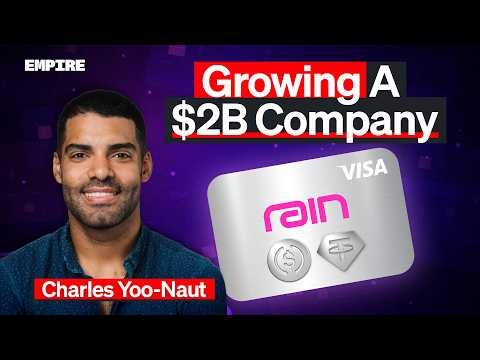
The global financial system is undergoing a fundamental shift towards tokenized money, driven by efficiency gains and demand for dollar access in emerging markets. This transition will upgrade core payment rails, not just add layers.
Builders should focus on infrastructure that collapses existing financial stacks, leveraging stablecoins for global reach and capital efficiency. Investors should seek companies enabling this "under the surface" upgrade, particularly those with direct network memberships.
The future of finance is programmable and global. Companies like Rain, by building core stablecoin infrastructure and securing direct network access, are positioned to capture immense value as more of the world's money moves onchain over the next 6-12 months.
The crypto industry is experiencing a gravitational pull towards institutionalization, where traditional finance and tech giants are increasingly building on or acquiring web3 infrastructure and talent.
Monitor projects like MegaETH that are launching with clear, measurable KPIs for their token generation events.
The next 6-12 months will see increased competition from well-capitalized, traditional players building on crypto rails, potentially limiting direct token exposure to fundamental infrastructure plays.
The Ethereum scaling narrative is evolving from L2s as mere L1 extensions to specialized, high-performance execution layers. This creates a barbell structure where Ethereum provides core security, and L2s deliver extreme throughput and novel features.
Builders should explore high-performance L2s like MegaETH for applications requiring ultra-low latency and high transaction volumes, especially in gaming, DeFi, and AI agent interactions, where traditional fee models are prohibitive.
MegaETH's mainnet launch, with its technical innovations and unconventional economic and app strategies, signals a new generation of L2s.
The theoretical certainty of quantum computing, coupled with accelerating engineering breakthroughs, means the digital asset space must proactively build "crypto agility" into its core protocols. This ensures systems can adapt to new cryptographic standards as current ones become obsolete.
Secure your Bitcoin by ensuring it resides in unspent SegWit or P2SH addresses, as these keep your public key hidden until spent. This provides a temporary shield against quantum attacks.
Quantum computing is not a distant threat but a near-term risk with a 20% chance of moving Satoshi's coins by 2030. Ignoring this could lead to a systemic collapse of the "store of value" narrative for Bitcoin and other digital assets, forcing a costly and painful reset.
The crypto industry must shift from viewing quantum as a distant threat to an imminent engineering challenge requiring proactive, coordinated defense.
Ensure any long-term Bitcoin holdings are in SegWit addresses never spent from, as these public keys remain hashed and are currently more resistant to quantum attacks.
A 20% chance of Satoshi's coins moving by 2030, and near certainty by 2035, means delaying upgrades is a multi-billion dollar bet against Bitcoin's core security narrative.