Intent Over Implementation: The value in software creation shifts from low-level coding to clearly defining intent and design, with AI handling the technical execution.
Rapid Prototyping: Builders can now rapidly prototype and deploy complex, full-stack applications, significantly compressing development cycles and lowering entry barriers.
New Creator Economy: Expect a surge in non-technical creators building sophisticated applications, driving innovation in UI/UX and personalized content.
Strategic Shift: The "factory-first" mindset is a strategic reorientation towards physical production, enabled by AI, extending beyond traditional manufacturing to all large-scale infrastructure.
Builder/Investor Note: Focus on companies applying modular design, AI-driven process optimization, and automation to sectors like housing, energy, and mining. Data centers are a leading indicator for these trends.
The "So What?": Rebuilding America's industrial capacity through these methods offers a competitive advantage, impacting defense, consumer goods, and commercial sectors in the next 6-12 months.
Strategic Implication: The future of AI agents hinges on practical utility and adaptive reasoning, not just raw scale. Models that integrate expert feedback and iterative thinking will outperform those focused solely on benchmarks.
Builder/Investor Note: Builders should prioritize robust generalization through diverse training perturbations. Investors should seek models that demonstrate real-world adoption and cost-effective scalability for multi-agent architectures.
The So What?: The next 6-12 months will see a shift towards smaller, highly specialized, and deeply integrated AI models that function as reliable co-workers, driving efficiency in developer workflows and complex agentic tasks.
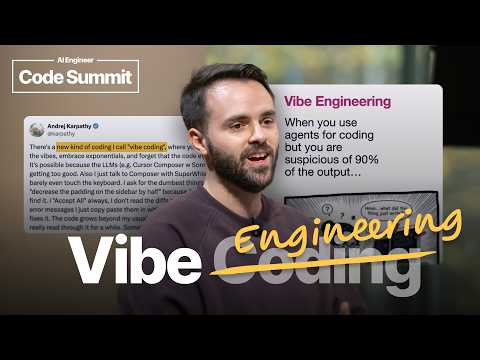
Strategic Shift: The industry is moving from code generation to code orchestration. The value lies in guiding AI, not just prompting it.
Builder/Investor Note: Invest in tools that enhance "vibe engineering" (real-time steering, context management) and education for senior developers. Avoid strategies that solely rely on AI to replace junior talent without skilled oversight.
The "So What?": Over the next 6-12 months, the ability to effectively "vibe engineer" will become a critical differentiator, separating high-performing teams from those drowning in AI-generated "slop."
Strategic Implication: The next frontier in AI involves a fundamental shift from statistical compression to genuine abstraction and understanding.
Builder/Investor Note: Focus on research and development that grounds AI in first principles, leading to more robust, efficient, and interpretable systems, rather than solely scaling existing empirical architectures.
The "So What?": The pursuit of mathematically derived, parsimonious, and self-consistent AI architectures offers a path to overcome current limitations, enabling systems that truly learn, adapt, and reason in the next 6-12 months and beyond.
Data Scarcity is a Feature, Not a Bug: Be wary of narratives built on incomplete data. Just because a dataset (on-chain, AI training) is all we have, doesn't mean it's representative.
Standardization is Survival: For any new technology (crypto protocols, AI models), robust "lexicography" and clear documentation are critical for long-term adoption and preventing fragmentation.
Question the "Received Law": Don't assume current "archaeological evidence" (e.g., current blockchain data, AI model limitations) tells the whole story. Look for the "perishable materials" that might be missing.
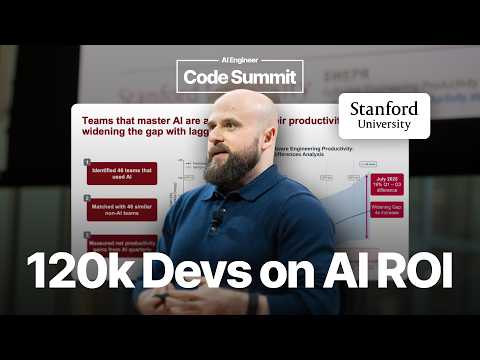
Strategic Shift: AI ROI isn't about adoption, it's about intelligent adoption. The gap between top and bottom performers will widen based on measurement sophistication and codebase health.
Builder/Investor Note: For builders, prioritize codebase hygiene and engineer training before or concurrently with AI rollout. For investors, scrutinize AI productivity claims; ask about code quality, rework rates, and specific measurement frameworks beyond simple usage.
The "So What?": In the next 6-12 months, companies that master AI integration by focusing on quality, measurement, and environment will compound their gains, while those chasing superficial metrics risk significant tech debt and negative ROI.
Strategic Implication: The next frontier of AI in software isn't just *generating* code, but *governing* its quality. This shift will redefine competitive advantage.
Builder/Investor Note: Prioritize investments in AI-powered quality gates, intelligent code review, and dynamic testing. For builders, feed your AI tools rich, comprehensive context. For investors, look for companies building these "picks and shovels."
The "So What?": The promised 2x-10x productivity gains are real, but they won't come from raw code generation alone. The next 6-12 months will see a scramble to implement agentic, context-aware quality workflows to unlock AI's true potential across the SDLC.
Strategic Shift: The competitive edge in AI agents is moving from clever architecture to superior model training data and robust RL environments.
Builder/Investor Note: Prioritize raw model capability over complex agent stacks. Builders should contribute to open-source RL environments; investors should seek companies focused on generating and leveraging high-quality training data.
The "So What?": The next 6-12 months will see a race to build and utilize real-world, outcome-driven benchmarks. Open initiatives like Client Bench could democratize model improvement and accelerate AI development significantly.
Stablecoins Go Global: Prepare for a $2T market, fueled primarily by international demand, potentially reshaping banking competition.
TradFi Bridge Built: Institutional adoption is accelerating (Schwab, BlackRock), creating a stark disconnect between strong fundamentals and current market sentiment—ripe for alpha hunters.
Ethereum Adapts: ETH's deep liquidity anchors DeFi, but stablecoins and new L1s (like Thru) challenge its dominance, pushing ongoing evolution (Restaking, potential VM changes).
Bitcoin Pause Likely: Expect potential short-term consolidation for Bitcoin as positive news fuel runs low; macro risks remain, but new ATHs are anticipated later this year.
Solana Strong Bet: SOL emerges as the preferred L1 alternative, driven by superior architecture, ecosystem growth, and significant treasury buying pressure on the horizon.
Altcoins Demand Substance: Market rationalization favors projects with realistic valuations and fundamentals; high-beta focus shifts to SOL memes, select strong L1s/apps (SUI, Hype), or SOL ecosystem plays (restaking), competing with leveraged BTC exposure.
Real Stakes Drive Engagement: Integrating significant financial risk/reward ($1M+ prize pools) creates intense player engagement, emergent strategies, and social dynamics far exceeding traditional games.
Off-Chain Flexibility is Crucial (For Now): While the dream is fully on-chain, managing multi-million dollar game economies necessitates off-chain components for exploit mitigation, balancing, and analysis, at least in the near term.
Targeting Degens Works: Cambria proves there's a potent market at the intersection of crypto traders and hardcore MMO players who crave high-stakes, economically meaningful gameplay.
**Saylor's Playbook Goes Viral:** The MSTR strategy of leveraging stock premiums to acquire Bitcoin is being actively replicated, potentially fragmenting demand but also increasing overall leveraged exposure.
**Leverage Risk Amplified:** New MSTR-like vehicles often lack an underlying business, making them pure, high-risk leveraged bets on Bitcoin funded by debt, vulnerable to sharp price declines.
**GBTC Déjà Vu:** The rise of these debt-fueled Bitcoin acquisition vehicles strongly echoes the dynamics of the ultimately disastrous GBTC premium trade, signaling caution is warranted as this trend accelerates.
**ETF Flows Are Legit:** The billions pouring into Bitcoin ETFs represent real, broad-based demand, not just arbitrage froth.
**Beware the MSTR Clones:** The rise of leveraged Bitcoin-buying public companies is the biggest near-term systemic risk – watch those premiums.
**RWAs Are Real AF:** Don't sleep on Real World Assets; platforms like Pendle and Maple show explosive growth and represent the next major crypto narrative.
Don't Benchmark VCs Against Bitcoin: It's comparing different asset classes with separate goals and risk profiles.
Use Altcoin Baskets Instead: A weighted average of major altcoins (ETH, SOL, etc.) offers a more relevant performance yardstick for crypto VCs.
Know Your Exposure: LPs seeking Bitcoin returns should buy Bitcoin directly; VC funds offer exposure to the venture-style growth potential of crypto beyond Bitcoin.