The Macro Shift: Context management is the new compute. As models get smarter, the winning architecture will be the one that most efficiently partitions and feeds relevant data to sub-agents.
The Tactical Edge: Prioritize reviewability. When building or using agents, focus on tools that provide clear diffs and tours of changes rather than just raw code generation.
The Bottom Line: The developer's role is evolving from a writer to an orchestrator. Success in the next 12 months depends on mastering the skill of agentic review rather than manual syntax.
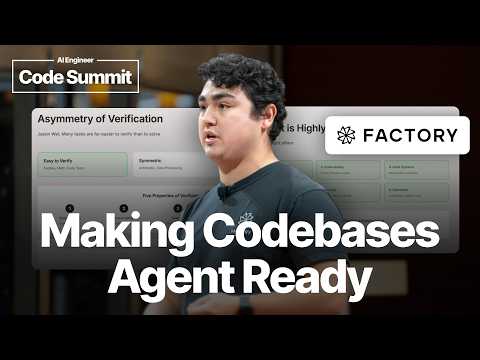
The Macro Shift: Engineering is moving from a headcount-driven Opex model to an infrastructure-driven autonomy model where validation is the primary capital asset.
The Tactical Edge: Audit your codebase against the eight pillars of automated validation. Start by asking agents to generate tests for existing logic to close the coverage gap.
The Bottom Line: Massive velocity gains are not found in the next model update. They are found in the rigorous internal standards that allow agents to operate without human hand-holding.
[Algorithmic Convergence]. The gap between symbolic logic and neural networks is closing through category theory. Expect architectures that are "correct by construction" rather than just "likely correct."
[Audit Architecture]. Evaluate new models based on their "algorithmic alignment" rather than just parameter count. Prioritize implementations that bake in non-invertible logic.
The next year will see a shift from scaling data to scaling structural priors. If you aren't thinking about how your model's architecture mirrors the problem's topology, you are just an alchemist in a world about to discover chemistry.
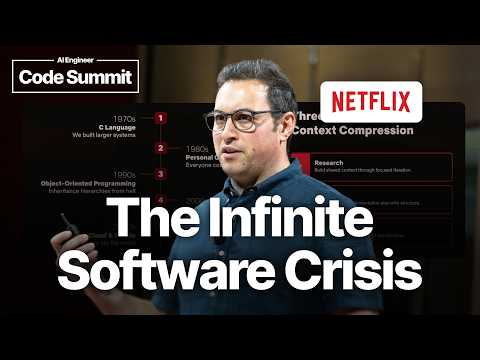
Strategic Implication: The future of software development isn't about *if* we use AI, but *how* we integrate human understanding and architectural discipline to prevent an "infinite software crisis.
Builder/Investor Note: Builders must prioritize deep system understanding and explicit planning over raw generation speed. Investors should favor companies that implement robust human-in-the-loop processes for AI-assisted development.
The "So What?": Over the next 6-12 months, the ability to "see the seams" and manage complexity will differentiate thriving engineering teams from those drowning in unmaintainable, AI-generated code.
Strategic Implication: The market for AI transformation services is expanding rapidly, driven by enterprises seeking to integrate AI for tangible business outcomes.
Builder/Investor Note: Focus on AI solutions with clear, practical applications for mid-market and enterprise clients. Technical talent capable of bridging research with deployment holds significant value.
The "So What?": The next 6-12 months will see increased demand for AI engineers who can implement and scale AI solutions, moving beyond proof-of-concept to widespread adoption.
Compensation Innovation: The traditional compensation playbook for engineers is outdated. New models that directly reward AI-augmented output will attract top talent and drive efficiency.
Builder/Investor Note: Founders should re-evaluate their incentive structures. Investors should seek companies experimenting with these models, as they may achieve outsized productivity.
The "So What?": The productivity gap between AI-augmented and non-AI-augmented engineers will widen. Companies that adapt their incentives will capture disproportionate value in the next 6-12 months.
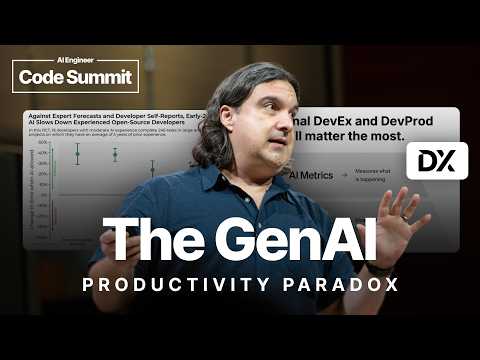
Strategic Shift: Successful AI integration means identifying and solving *your* organization's specific SDLC bottlenecks, not just boosting code completion.
Builder/Investor Note: Prioritize psychological safety and invest in AI skill development. For builders, this means dedicated learning time; for investors, look for companies that do this well.
The "So What?": The next 6-12 months will separate organizations that merely *adopt* AI from those that *master* its strategic application and measurement, driving real competitive advantage.
Strategic Implication: AI integration is a company-wide transformation, not a feature. Organizations must re-architect processes, tools, and culture to compete.
Builder/Investor Note: Prioritize internal tooling that democratizes AI experimentation. Look for companies establishing "model behavior" as a distinct, cross-functional discipline.
The "So What?": The next 6-12 months will reward builders who bake AI security and user control into product design from day one, recognizing that technical mitigations alone are insufficient.
Stablecoins Go Global: Prepare for a $2T market, fueled primarily by international demand, potentially reshaping banking competition.
TradFi Bridge Built: Institutional adoption is accelerating (Schwab, BlackRock), creating a stark disconnect between strong fundamentals and current market sentiment—ripe for alpha hunters.
Ethereum Adapts: ETH's deep liquidity anchors DeFi, but stablecoins and new L1s (like Thru) challenge its dominance, pushing ongoing evolution (Restaking, potential VM changes).
Bitcoin Pause Likely: Expect potential short-term consolidation for Bitcoin as positive news fuel runs low; macro risks remain, but new ATHs are anticipated later this year.
Solana Strong Bet: SOL emerges as the preferred L1 alternative, driven by superior architecture, ecosystem growth, and significant treasury buying pressure on the horizon.
Altcoins Demand Substance: Market rationalization favors projects with realistic valuations and fundamentals; high-beta focus shifts to SOL memes, select strong L1s/apps (SUI, Hype), or SOL ecosystem plays (restaking), competing with leveraged BTC exposure.
Real Stakes Drive Engagement: Integrating significant financial risk/reward ($1M+ prize pools) creates intense player engagement, emergent strategies, and social dynamics far exceeding traditional games.
Off-Chain Flexibility is Crucial (For Now): While the dream is fully on-chain, managing multi-million dollar game economies necessitates off-chain components for exploit mitigation, balancing, and analysis, at least in the near term.
Targeting Degens Works: Cambria proves there's a potent market at the intersection of crypto traders and hardcore MMO players who crave high-stakes, economically meaningful gameplay.
**Saylor's Playbook Goes Viral:** The MSTR strategy of leveraging stock premiums to acquire Bitcoin is being actively replicated, potentially fragmenting demand but also increasing overall leveraged exposure.
**Leverage Risk Amplified:** New MSTR-like vehicles often lack an underlying business, making them pure, high-risk leveraged bets on Bitcoin funded by debt, vulnerable to sharp price declines.
**GBTC Déjà Vu:** The rise of these debt-fueled Bitcoin acquisition vehicles strongly echoes the dynamics of the ultimately disastrous GBTC premium trade, signaling caution is warranted as this trend accelerates.
**ETF Flows Are Legit:** The billions pouring into Bitcoin ETFs represent real, broad-based demand, not just arbitrage froth.
**Beware the MSTR Clones:** The rise of leveraged Bitcoin-buying public companies is the biggest near-term systemic risk – watch those premiums.
**RWAs Are Real AF:** Don't sleep on Real World Assets; platforms like Pendle and Maple show explosive growth and represent the next major crypto narrative.
Don't Benchmark VCs Against Bitcoin: It's comparing different asset classes with separate goals and risk profiles.
Use Altcoin Baskets Instead: A weighted average of major altcoins (ETH, SOL, etc.) offers a more relevant performance yardstick for crypto VCs.
Know Your Exposure: LPs seeking Bitcoin returns should buy Bitcoin directly; VC funds offer exposure to the venture-style growth potential of crypto beyond Bitcoin.