The Macro Shift: The Great Re-Shoring. National security now depends on domestic production of critical minerals and semiconductors.
The Tactical Edge: Build for Scale. Prioritize manufacturing competence over pure software features to win government contracts.
The Bottom Line: The defense industrial base is being rebuilt from the ground up. The next decade belongs to the builders who can merge Silicon Valley speed with the Pentagon's scale.
The Macro Trend: Biological Sovereignty. As global systems destabilize, the Amazon remains the most critical piece of biological infrastructure on the planet.
The Tactical Edge: Support Jungle Keepers. Direct capital to organizations that convert loggers into rangers to secure land concessions.
The Amazon is a finite asset under active siege. Protecting it requires a blend of primitive survival skills and high-tech surveillance over the next 18 months.
The Macro Pivot: As generative AI masters simulation, the physical world becomes a high-fidelity playground for software.
The Tactical Edge: Invest in the "brain" layer rather than the "limb" layer. Software that can generalize across different hardware forms will capture the most value.
The next decade belongs to embodied AI that reasons in real time. If you are waiting for the hardware to look perfect before paying attention, you will miss the moment the software takes over the physical world.
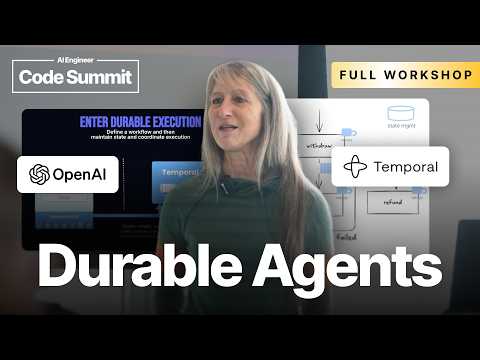
The industry is moving from "Agent as a Script" to "Agent as a Durable Service" where state management is handled by the infrastructure.
Wrap your existing API tools in the `activity_as_tool` function to gain automatic retries and execution history.
Reliability is the only moat in the agentic economy. If your agent cannot survive a server restart during a three-day task, it is not ready for the enterprise.
The Macro Trend: The move from fragmented content libraries to integrated health systems where AI synthesizes biomarkers and movement.
The Tactical Edge: Construct internal LLM tools to categorize qualitative feedback. This turns thousands of raw reviews into a precise roadmap.
The Bottom Line: Building a $100M ARR consumer app requires mastery of both growth loops and product retention. Solve for the daily habit to win the long game.
The transition from general-purpose AI to specialized application layers. As foundation models commoditize, value migrates to the "fat tail" of human-centric complexity.
Prioritize building or investing in "DNA of the future" companies that incumbents must eventually acquire to survive. Focus on winning the "point of attack" by staying deep in the technical details.
We are in a unique market where demand growth justifies high valuations. Success over the next year depends on identifying founders who are the absolute best in the world at one specific thing.
Stablecoins Go Global: Prepare for a $2T market, fueled primarily by international demand, potentially reshaping banking competition.
TradFi Bridge Built: Institutional adoption is accelerating (Schwab, BlackRock), creating a stark disconnect between strong fundamentals and current market sentiment—ripe for alpha hunters.
Ethereum Adapts: ETH's deep liquidity anchors DeFi, but stablecoins and new L1s (like Thru) challenge its dominance, pushing ongoing evolution (Restaking, potential VM changes).
Bitcoin Pause Likely: Expect potential short-term consolidation for Bitcoin as positive news fuel runs low; macro risks remain, but new ATHs are anticipated later this year.
Solana Strong Bet: SOL emerges as the preferred L1 alternative, driven by superior architecture, ecosystem growth, and significant treasury buying pressure on the horizon.
Altcoins Demand Substance: Market rationalization favors projects with realistic valuations and fundamentals; high-beta focus shifts to SOL memes, select strong L1s/apps (SUI, Hype), or SOL ecosystem plays (restaking), competing with leveraged BTC exposure.
Real Stakes Drive Engagement: Integrating significant financial risk/reward ($1M+ prize pools) creates intense player engagement, emergent strategies, and social dynamics far exceeding traditional games.
Off-Chain Flexibility is Crucial (For Now): While the dream is fully on-chain, managing multi-million dollar game economies necessitates off-chain components for exploit mitigation, balancing, and analysis, at least in the near term.
Targeting Degens Works: Cambria proves there's a potent market at the intersection of crypto traders and hardcore MMO players who crave high-stakes, economically meaningful gameplay.
**Saylor's Playbook Goes Viral:** The MSTR strategy of leveraging stock premiums to acquire Bitcoin is being actively replicated, potentially fragmenting demand but also increasing overall leveraged exposure.
**Leverage Risk Amplified:** New MSTR-like vehicles often lack an underlying business, making them pure, high-risk leveraged bets on Bitcoin funded by debt, vulnerable to sharp price declines.
**GBTC Déjà Vu:** The rise of these debt-fueled Bitcoin acquisition vehicles strongly echoes the dynamics of the ultimately disastrous GBTC premium trade, signaling caution is warranted as this trend accelerates.
**ETF Flows Are Legit:** The billions pouring into Bitcoin ETFs represent real, broad-based demand, not just arbitrage froth.
**Beware the MSTR Clones:** The rise of leveraged Bitcoin-buying public companies is the biggest near-term systemic risk – watch those premiums.
**RWAs Are Real AF:** Don't sleep on Real World Assets; platforms like Pendle and Maple show explosive growth and represent the next major crypto narrative.
Don't Benchmark VCs Against Bitcoin: It's comparing different asset classes with separate goals and risk profiles.
Use Altcoin Baskets Instead: A weighted average of major altcoins (ETH, SOL, etc.) offers a more relevant performance yardstick for crypto VCs.
Know Your Exposure: LPs seeking Bitcoin returns should buy Bitcoin directly; VC funds offer exposure to the venture-style growth potential of crypto beyond Bitcoin.