The Macro Shift: Context management is the new compute. As models get smarter, the winning architecture will be the one that most efficiently partitions and feeds relevant data to sub-agents.
The Tactical Edge: Prioritize reviewability. When building or using agents, focus on tools that provide clear diffs and tours of changes rather than just raw code generation.
The Bottom Line: The developer's role is evolving from a writer to an orchestrator. Success in the next 12 months depends on mastering the skill of agentic review rather than manual syntax.
The Macro Shift: Engineering is moving from a headcount-driven Opex model to an infrastructure-driven autonomy model where validation is the primary capital asset.
The Tactical Edge: Audit your codebase against the eight pillars of automated validation. Start by asking agents to generate tests for existing logic to close the coverage gap.
The Bottom Line: Massive velocity gains are not found in the next model update. They are found in the rigorous internal standards that allow agents to operate without human hand-holding.
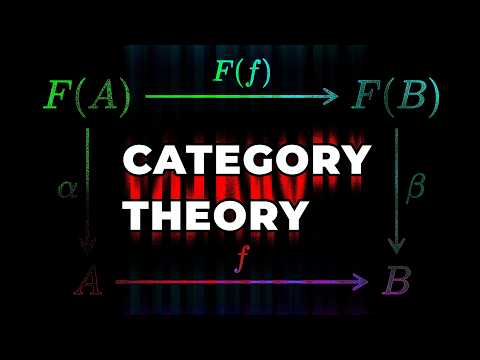
[Algorithmic Convergence]. The gap between symbolic logic and neural networks is closing through category theory. Expect architectures that are "correct by construction" rather than just "likely correct."
[Audit Architecture]. Evaluate new models based on their "algorithmic alignment" rather than just parameter count. Prioritize implementations that bake in non-invertible logic.
The next year will see a shift from scaling data to scaling structural priors. If you aren't thinking about how your model's architecture mirrors the problem's topology, you are just an alchemist in a world about to discover chemistry.
Strategic Implication: The future of software development isn't about *if* we use AI, but *how* we integrate human understanding and architectural discipline to prevent an "infinite software crisis.
Builder/Investor Note: Builders must prioritize deep system understanding and explicit planning over raw generation speed. Investors should favor companies that implement robust human-in-the-loop processes for AI-assisted development.
The "So What?": Over the next 6-12 months, the ability to "see the seams" and manage complexity will differentiate thriving engineering teams from those drowning in unmaintainable, AI-generated code.
Strategic Implication: The market for AI transformation services is expanding rapidly, driven by enterprises seeking to integrate AI for tangible business outcomes.
Builder/Investor Note: Focus on AI solutions with clear, practical applications for mid-market and enterprise clients. Technical talent capable of bridging research with deployment holds significant value.
The "So What?": The next 6-12 months will see increased demand for AI engineers who can implement and scale AI solutions, moving beyond proof-of-concept to widespread adoption.
Compensation Innovation: The traditional compensation playbook for engineers is outdated. New models that directly reward AI-augmented output will attract top talent and drive efficiency.
Builder/Investor Note: Founders should re-evaluate their incentive structures. Investors should seek companies experimenting with these models, as they may achieve outsized productivity.
The "So What?": The productivity gap between AI-augmented and non-AI-augmented engineers will widen. Companies that adapt their incentives will capture disproportionate value in the next 6-12 months.
Strategic Shift: Successful AI integration means identifying and solving *your* organization's specific SDLC bottlenecks, not just boosting code completion.
Builder/Investor Note: Prioritize psychological safety and invest in AI skill development. For builders, this means dedicated learning time; for investors, look for companies that do this well.
The "So What?": The next 6-12 months will separate organizations that merely *adopt* AI from those that *master* its strategic application and measurement, driving real competitive advantage.
Strategic Implication: AI integration is a company-wide transformation, not a feature. Organizations must re-architect processes, tools, and culture to compete.
Builder/Investor Note: Prioritize internal tooling that democratizes AI experimentation. Look for companies establishing "model behavior" as a distinct, cross-functional discipline.
The "So What?": The next 6-12 months will reward builders who bake AI security and user control into product design from day one, recognizing that technical mitigations alone are insufficient.
ETH's Valuation Paradigm Shift: Value ETH based on Total Value Secured (TVS), not diminishing transaction fees, as it aims to secure trillions in global assets.
L1+L2 is the Winning Formula: Ethereum's strategy of scaling L1 alongside a diverse L2 ecosystem (offering political/business model diversity) is designed to onboard the world.
Coordination & BD are Crucial: Renewed focus on cohesive narrative, business development (like Etherealize), and community alignment are vital to executing Ethereum's ambitious roadmap.
Brace for Capital Controls: The US is likely to implement capital controls over politically unpalatable tariffs to rebalance its economy, fundamentally changing global capital flows.
Money Printing is Non-Negotiable: Regardless of political rhetoric, the US will print money to manage the fallout from capital flight and fund government spending, massively benefiting hard assets.
Bitcoin & Gold are Your Life Rafts: In an era of devaluing fiat and financial repression, Bitcoin and gold are critical for wealth preservation and growth. Ditch long-term bonds.
ZKPoW is a Novel Force: Nockchain's ZK Proof of Work directly builds valuable ZK proving capacity, turning mining into a productive, network-enhancing activity.
Hardware Revolution Looms: The mining competition will drive innovation in ZK-specific hardware (FPGAs, ASICs for polynomial math), creating a new hardware market distinct from Bitcoin's.
Intent-Driven Future: Nockchain's architecture points towards a future of composable "micro-apps" and verifiable services, where on-chain logic focuses on proof verification, potentially enabling new decentralized AI/ML applications and "computational commodities."
**Fiscal Dominance is Here:** Government spending, not just Fed policy, is the primary driver of the current inflationary pressures and will likely lead to an 8% GDP deficit.
**Prepare for Intervention:** Expect capital controls (like remittance taxes) and yield curve control as governments grapple with the consequences of their spending.
**Store-of-Value is King:** In an environment where traditional savings (e.g., 4% on bonds) can't match 15% inflation in essential costs, assets like tech stocks and Bitcoin become non-negotiable for wealth preservation.
Fiscal Doom Loop: The US is locked in a fiscal spiral of growing deficits and debt that it seems unwilling or unable to escape, making dollar debasement a significant long-term risk.
Macro is King: Geopolitical trends, capital flows, and policy decisions (like buybacks and potential yield curve control) are now more critical drivers of asset prices than individual company fundamentals.
Bitcoin's Ascent: In a world of "Ponzi schemes," Bitcoin stands out as a rational hedge and potentially the "generational trade" against failing monetary and fiscal policies.