The Macro Shift: Scaling laws are hitting a diminishing return on raw data but a massive acceleration in reasoning. The shift from statistical matching to reasoning agents happens when models can recursively check their own logic.
The Tactical Edge: Build for the agentic future by prioritizing high-context data pipelines. Models perform better when you provide massive context rather than relying on zero-shot inference.
The Bottom Line: We are 24 months away from AI that makes unassisted human thought look like navigating London without a map. Prepare for a world where the most valuable skill is directing machine agency rather than performing manual logic.
The transition from model-centric to loop-centric development. Performance is now a function of the feedback cycle rather than just the weights of the frontier model.
Implement an LLM-as-a-judge step that outputs a "Reason for Failure" field. Feed this string directly into a meta-prompt to update your agent's system instructions automatically.
Static prompts are technical debt. Teams that build automated systems to iterate on their agent's instructions will outpace those waiting for the next model training run.
The Macro Shift: The transition from writing to reviewing as the primary engineering activity. As agents generate more code, the human role moves from creator to editor.
The Tactical Edge: Build CLIs for every internal tool to give agents a native text interface. This increases accuracy and speed compared to visual automation.
The Bottom Line: Developer experience is the infrastructure for AI. Investing in clean code and fast feedback loops is the only way to ensure AI productivity gains do not decay over the next 12 months.
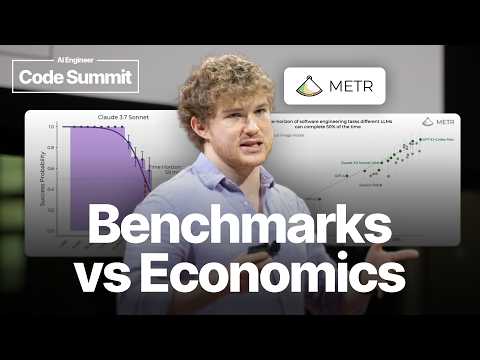
The Capability-Productivity Gap. We are entering a period where model intelligence outpaces our ability to integrate it into high stakes production.
Audit your stack. Identify tasks where "good enough" generation is a win versus high context tasks where AI is currently a net negative.
Do not mistake a climbing benchmark for a finished product. For the next year, the biggest wins are not in smarter models but in better verification loops.
The transition from simple Large Language Models to Reasoning Models marks the end of the stochastic parrot era.
Build agentic workflows that utilize high-context windows for recursive problem solving.
We are moving toward a world where intelligence is a commodity. Your value will shift from knowing things to directing outcomes over the next 12 months.
The Macro Pivot: Agentic Abstraction. As the cost of logic hits zero, the value of a developer moves from how to build to what to build.
The Tactical Edge: Adopt Orchestrators. Replace your standard editor with agent-first platforms today to learn the art of directing sub-agents before the 2026 deadline.
The Bottom Line: The next 12 months will reward those who stop writing code and start building the systems that write it for them.
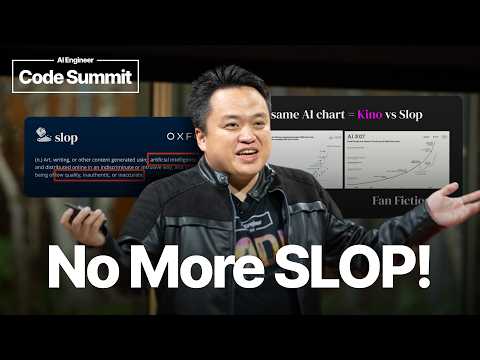
The Macro Movement: The Token Deflation. As compute becomes a commodity, the value of the "Human-in-the-Loop" moves from production to architectural oversight.
The Tactical Edge: Implement Code Maps. Use AI to index and understand your entire repository to ensure every generated line aligns with existing logic.
The Bottom Line: The next year belongs to the "Taste-Driven Developer." If you optimize for volume, you produce slop; if you optimize for accountability, you build a moat.
The Macro Shift: Software development is moving from human-led logic to agent-led verification.
The Tactical Edge: Use sub-agents to isolate testing from creation to prevent context pollution.
The Bottom Line: The technical barrier is evaporating. In the next 12 months, the winning platforms will be those that require the fewest technical decisions from the user.
Institutional capital is increasingly seeking permissionless, global markets, but existing blockchain infrastructure struggles to meet this demand without compromising core decentralized values. Zero attempts to bridge this gap by delivering enterprise-grade throughput on a broadly decentralized network.
Evaluate Zero's technical papers (QMDB, FAFO, Zero OS) and upcoming mainnet launch. Builders should consider its multi-VM and Linux binary compatibility for deploying high-performance applications, especially in payments and global markets.
Zero represents a bold attempt to solve the blockchain scalability trilemma through fundamental architectural breakthroughs and strategic institutional partnerships. Its success could redefine what's possible for decentralized finance and global markets over the next 6-12 months, making it a critical project to monitor.
The industry is moving from a "build it and they will come" mentality to a highly intentional, ecosystem-first approach, recognizing that raw tech specs alone don't guarantee adoption. This is coupled with a critical legal battle to define developer liability, which will dictate the future of open-source crypto innovation.
Investigate projects that prioritize real-world utility and long-term ecosystem health over short-term token hype. For builders, focus on creating "10x" user experiences that justify new infrastructure, while understanding the evolving legal framework for non-custodial software.
The next 6-12 months will see a clearer delineation of regulatory boundaries for developers and a competitive race among high-performance chains to onboard institutional and consumer applications. Success hinges on a blend of technical superiority, strategic ecosystem cultivation, and legal clarity.
The US economy undergoes a "Great Reset" towards higher nominal growth, rates, and deficits, underpinned by surging gig economy tax collections and unprecedented AI capital expenditure, creating a disconnect with conventional sentiment.
Overweight international assets, particularly Latin America and Europe, to diversify from over-concentrated US equity.
The confluence of hidden nominal growth, aggressive fiscal policy, and AI-driven capex points to a sustained inflationary environment and asset price appreciation through 2026, challenging recessionary fears and demanding a re-evaluation of portfolio allocations.
The DeFi era is consolidating. Institutional RWA adoption will drive isolated, high-volume activity on private chains. LeiFi builds the connective tissue to bridge these environments.
Builders and investors should prioritize infrastructure that abstracts multi-chain complexity and provides robust distribution for tokenized assets. Investigate LeiFi's new checkout product and intent system.
Exponential fragmentation is crypto's reality for the next decade. LeiFi's meta-aggregation, virtual machine, and intent system are foundational rails for institutional capital and RWA liquidity.
Diversify stablecoin holdings beyond regulated fiat-backed options. Allocate a portion to decentralized, crypto-backed stablecoins to gain uncorrelated yield, mitigate counterparty risk, and preserve property rights, especially for crypto-native operations or users in restrictive jurisdictions.
The increasing weaponization of traditional finance and demand for censorship resistance is driving a technical reality: the need for truly sovereign, code-governed financial primitives. This pushes capital towards crypto-native stablecoins that offer an opt-out from traditional financial control.
Regulated stablecoins will become commoditized rails for traditional finance, while truly decentralized stablecoins will solidify their niche as the preferred choice for those prioritizing censorship resistance, self-custody, and organic DeFi yield. Understanding this bifurcation is crucial for positioning portfolios and building infrastructure that aligns with crypto's core ethos.
The real estate industry is undergoing a fundamental re-architecture, moving from centralized, opaque, and debt-heavy models to decentralized, transparent, and equity-driven tokenized platforms. This shift, powered by AI and blockchain, will redefine property access and wealth creation.
Investigate tokenization platforms that leverage AI for appraisal and inspection, particularly those offering yield-bearing real estate tokens. Consider strategies that use rental income to service interest on borrowed capital, effectively creating leveraged exposure to appreciating assets without traditional mortgage obligations.
The convergence of AI and tokenization is not just optimizing real estate; it is creating entirely new financial primitives. Understanding Resi's full-stack approach—intelligence, infrastructure, and financial services—is crucial for positioning yourself in a market that could soon offer "mortgages you don't pay back" and unlock unprecedented liquidity for property owners.