The decoupling of parameter count from active compute via sparsity means intelligence is becoming a software optimization problem as much as a hardware one.
Audit your agentic workflows for turn efficiency rather than just cost per token.
In a world of infinite tokens, the winner is the one who can verify the truth the fastest.
The Macro Pivot: The transition from LLMs as chat interfaces to LLMs as logic engines. As models move from text prediction to logic execution, the value moves from the model itself to the verification systems surrounding it.
The Tactical Edge: Audit the stack. Prioritize the integration of agentic coding tools like Jules to shorten the feedback loop between ideation and deployment.
The Bottom Line: Code is the only medium where AI can self-correct and scale without human intervention. The next 12 months will be defined by who can turn raw model power into reliable, self-healing code.
The Macro Transition: We are moving from "fire-and-forget" prompts to durable execution environments where state is as important as the model itself.
The Tactical Edge: Wrap your existing tool calls in the `useStep` function to gain instant retry logic and execution history.
The Bottom Line: Reliability is the primary moat in the agent market. Builders who adopt durable workflows will move to production while others are still debugging local scripts.
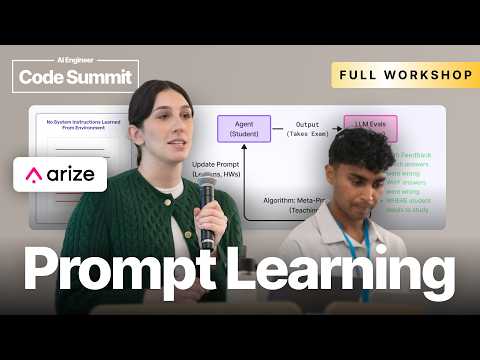
The move from manual prompt engineering to automated prompt learning. As models become commodities, the proprietary loop that refines them becomes the moat.
Implement a Train-Test Split for your prompts. Use a subset of failure data to generate new rules and validate them against a separate holdout set to ensure the logic holds.
Reliability is the only metric that matters for agent adoption. If you are not using a feedback loop to update your system instructions, you are building on sand.
The move from industrial management to creative inspiration. As AI automates routine tasks, the only remaining value is high-variance human creativity.
Apply the Keeper Test today. Ask your leads which team members they would fight for and provide generous exits for the rest to reset your talent bar.
Scaling doesn't require more rules. It requires better people. If you can maintain talent density, you can run fast while your competitors choke on their own handbooks.
Institutional capital is increasingly seeking permissionless, global markets, but existing blockchain infrastructure struggles to meet this demand without compromising core decentralized values. Zero attempts to bridge this gap by delivering enterprise-grade throughput on a broadly decentralized network.
Evaluate Zero's technical papers (QMDB, FAFO, Zero OS) and upcoming mainnet launch. Builders should consider its multi-VM and Linux binary compatibility for deploying high-performance applications, especially in payments and global markets.
Zero represents a bold attempt to solve the blockchain scalability trilemma through fundamental architectural breakthroughs and strategic institutional partnerships. Its success could redefine what's possible for decentralized finance and global markets over the next 6-12 months, making it a critical project to monitor.
The industry is moving from a "build it and they will come" mentality to a highly intentional, ecosystem-first approach, recognizing that raw tech specs alone don't guarantee adoption. This is coupled with a critical legal battle to define developer liability, which will dictate the future of open-source crypto innovation.
Investigate projects that prioritize real-world utility and long-term ecosystem health over short-term token hype. For builders, focus on creating "10x" user experiences that justify new infrastructure, while understanding the evolving legal framework for non-custodial software.
The next 6-12 months will see a clearer delineation of regulatory boundaries for developers and a competitive race among high-performance chains to onboard institutional and consumer applications. Success hinges on a blend of technical superiority, strategic ecosystem cultivation, and legal clarity.
The US economy undergoes a "Great Reset" towards higher nominal growth, rates, and deficits, underpinned by surging gig economy tax collections and unprecedented AI capital expenditure, creating a disconnect with conventional sentiment.
Overweight international assets, particularly Latin America and Europe, to diversify from over-concentrated US equity.
The confluence of hidden nominal growth, aggressive fiscal policy, and AI-driven capex points to a sustained inflationary environment and asset price appreciation through 2026, challenging recessionary fears and demanding a re-evaluation of portfolio allocations.
The DeFi era is consolidating. Institutional RWA adoption will drive isolated, high-volume activity on private chains. LeiFi builds the connective tissue to bridge these environments.
Builders and investors should prioritize infrastructure that abstracts multi-chain complexity and provides robust distribution for tokenized assets. Investigate LeiFi's new checkout product and intent system.
Exponential fragmentation is crypto's reality for the next decade. LeiFi's meta-aggregation, virtual machine, and intent system are foundational rails for institutional capital and RWA liquidity.
Diversify stablecoin holdings beyond regulated fiat-backed options. Allocate a portion to decentralized, crypto-backed stablecoins to gain uncorrelated yield, mitigate counterparty risk, and preserve property rights, especially for crypto-native operations or users in restrictive jurisdictions.
The increasing weaponization of traditional finance and demand for censorship resistance is driving a technical reality: the need for truly sovereign, code-governed financial primitives. This pushes capital towards crypto-native stablecoins that offer an opt-out from traditional financial control.
Regulated stablecoins will become commoditized rails for traditional finance, while truly decentralized stablecoins will solidify their niche as the preferred choice for those prioritizing censorship resistance, self-custody, and organic DeFi yield. Understanding this bifurcation is crucial for positioning portfolios and building infrastructure that aligns with crypto's core ethos.
The real estate industry is undergoing a fundamental re-architecture, moving from centralized, opaque, and debt-heavy models to decentralized, transparent, and equity-driven tokenized platforms. This shift, powered by AI and blockchain, will redefine property access and wealth creation.
Investigate tokenization platforms that leverage AI for appraisal and inspection, particularly those offering yield-bearing real estate tokens. Consider strategies that use rental income to service interest on borrowed capital, effectively creating leveraged exposure to appreciating assets without traditional mortgage obligations.
The convergence of AI and tokenization is not just optimizing real estate; it is creating entirely new financial primitives. Understanding Resi's full-stack approach—intelligence, infrastructure, and financial services—is crucial for positioning yourself in a market that could soon offer "mortgages you don't pay back" and unlock unprecedented liquidity for property owners.