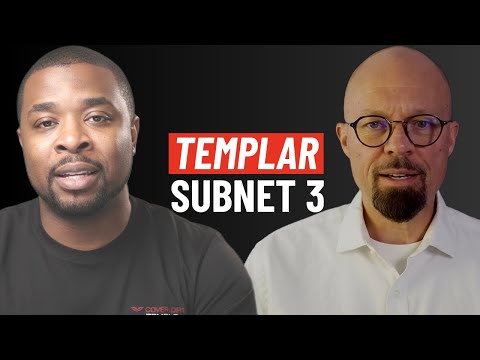
**A New Market is Born:** Templar isn't just cheaper; it enables something that was previously impossible for 99% of the world. Democratizing pre-training means anyone can build a truly custom, sovereign AI.
**Productization is Underway:** Covenant is no longer just a research project. With enterprise sales in motion, the focus is now on revenue. The team has committed that 100% of fees from custom training will be used to buy back its tokens.
**Economics are Being Rewritten:** Basilica’s incentive mechanism is a direct critique of unsustainable models on other compute subnets. Its focus on profitability and positive TAO flow sets a new standard for economic design on Bittensor.
AI Forces a Moral Reboot. The emergence of superintelligence renders our current societal goals dangerously obsolete. Survival must become the new prime directive.
Existence is a Team Sport. The "Don't Die" philosophy is a collective mission ("we don't die") to ensure species-wide survival, not a selfish quest for individual immortality.
Prepare for the Biological Sandbox. Humanity is moving from manipulating physical atoms and digital bits to programming our own biology—a frontier with both unimaginable potential and catastrophic risk.
Stop Trying to “Steer” AGI. The control paradigm is a dead end. The goal isn’t a more obedient tool; it’s a trustworthy teammate. We must shift from engineering control to cultivating care.
Alignment is a Process, Not a Product. True alignment isn't a fixed set of rules. It’s a dynamic process of moral learning, akin to raising a child. AIs that only follow rules are brittle and dangerous.
Build for Cooperation, Not Command. The technical path forward involves training AIs in rich, multi-agent environments where they must learn cooperation and theory of mind—the foundational skills for becoming a good member of a group.
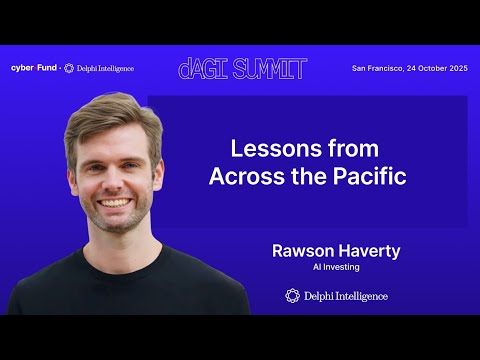
US Leads in Capital-Intensive Frontier AI; China Excels at Industrial Diffusion. The US leverages deep capital markets for its massive compute buildout and AGI research, while China uses state direction to embed AI into its vast industrial base via open-source models and hardware.
Market Structure Dictates AI Strategy. The US "efficient oligopoly" model prioritizes global dominance and profit reinvestment by a few players. China's "subjugated swarm" model creates intense domestic competition, driving down prices and accelerating adoption at the cost of profitability.
Geopolitical Tension May Be a Necessary Stabilizer. The competition between the US's freedom-oriented, frontier-pushing approach and China's stability-focused, diffusion-driven model creates a complementary tension that could be essential for navigating the "narrow corridor" between AI-driven totalitarianism and uncontrollable chaos.
Development timelines are collapsing from months to days. AI allows developers to swap entire asset libraries or generate new game concepts at unprecedented speed, turning a two-month art project into a day's work.
The lifespan of any single game is shrinking. Prepare for a world of disposable entertainment. As AI floods the market with content, the strategy will pivot from creating one long-lasting hit to deploying a rapid succession of engaging experiences.
Games are the next evolution of the attention economy. Just as memes became a core tool for community-building around tokens, easily created games will be the next engine for capturing and directing user attention in a hyper-competitive digital world.
Adopt a Stock Picker's Mentality. The crypto market is no longer a monolith where a rising tide lifts all boats. Focus on assets with real products, user growth, and cash flow, as the gap between winners and losers will only widen.
Shorting is a Tactical Assault, Not a Siege. Don't "invest" in a short. The only viable short strategies are tactical, targeting specific events like VC unlocks or news-driven spikes. Otherwise, even "total scams" can 5x against you.
Cultivate a Goldfish's Memory. The most critical trading skill is learning how to change your mind. Cut losing trades, forget the loss (but remember the lesson), and redeploy capital without emotional baggage. Stubbornness is a portfolio killer.
Word-of-mouth isn't a feature; it's the engine. Before spending a dime on marketing, obsess over the first 30 seconds of the user experience until people can't help but share it.
Being different is better than being better. Don't build incrementally better slideware. Redefine the core primitives of your category, as Gamma did by moving beyond the 16x9 slide.
Hire painfully slowly to protect your DNA. Resisting the temptation to scale headcount with user growth is a superpower. The goal isn't to hit a hiring target; it's to hire the best people.
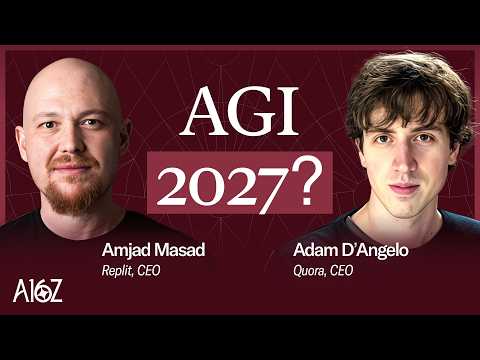
AGI Is a Definitional Debate. Progress toward an AI that can replace a remote worker is happening fast. However, achieving "true" human-like learning efficiency may require an entirely new paradigm beyond scaling current LLMs.
The New Creator Economy Is Code. AI is turning software development into a mainstream creative pursuit, empowering a new class of solo entrepreneurs who can build what previously required entire teams.
Incumbents Learned Their Lesson. Unlike past tech shifts, today's giants are aggressively adopting AI, making it both a sustaining *and* disruptive force. The market is large enough for both incumbents and startups to create massive value.
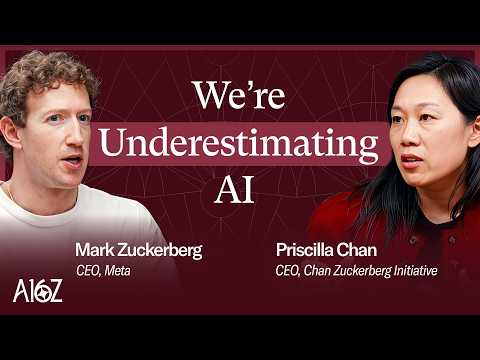
Build the Tools, Not Just the House: CZI’s greatest leverage comes from creating open-source tools and datasets. By building the fundamental infrastructure, they empower the entire scientific community—from academic labs to startups—to accelerate discovery.
Data Is the New Microscope: The future of biology hinges on a tight feedback loop between generating novel, purpose-built datasets and training domain-specific AI models on them. This synergy is unlocking insights that were previously impossible.
Virtual Biology Is the Next Frontier: Simulating biology computationally with "virtual cells" will become the new standard for research, enabling scientists to test riskier hypotheses faster and cheaper, dramatically compressing the timeline for major breakthroughs.
The demand for specialized "human alpha" in AI is intensifying, particularly for high-stakes problems where LLMs hit a performance ceiling. Platforms like Crunch are essential infrastructure for channeling this scarce human intelligence into decentralized networks.
Builders should integrate abstraction layers that simplify Web3 interaction for non-crypto native experts. This expands the talent pool and accelerates innovation by removing technical barriers to entry.
The future of decentralized AI hinges on effectively combining machine compute with unique human insight. Investing in platforms that bridge this gap will capture significant value as the "price of intelligence above benchmark" becomes increasingly transparent and monetizable.
The US is actively competing for crypto leadership, moving from a reactive, enforcement-first approach to proactive legislation and regulatory guidance. This strategic pivot aims to keep innovation and capital within American borders, positioning the US as a hub for future financial technology.
Monitor the progress of the Clarity Act and other market structure legislation in Congress. Focus on projects and protocols that align with the emerging regulatory framework, particularly those in DeFi and tokenization, as these areas stand to benefit most from increased certainty and institutional participation.
The next few years are critical for establishing durable crypto policy. A stable regulatory environment, coupled with strong political influence, will prevent future policy reversals. This period offers a unique opportunity for builders and investors to capitalize on a clearer path for onchain finance and technology.
The era of individual "superpowers" is here, where AI agents amplify personal expertise, allowing non-technical individuals to build and operate complex systems previously reserved for large teams. This democratizes high-skill output, shifting value from raw coding to strategic system design and prompt engineering.
Implement an agent-first workflow by setting up a personal Discord server with specialized AI sub-agents (e.g., "Saul Goodman" for legal, "Milhouse" for research). Train them with your data and integrate APIs for automated tasks like content generation or data analysis, reducing reliance on manual processes and external hires.
Over the next 6-12 months, the ability to effectively deploy and manage personal AI agents will be a critical differentiator. Those who master this will not only multiply their personal output but also gain a significant competitive advantage in content, trading, and online business, effectively becoming a one-person enterprise.
The convergence of legacy finance and DeFi is accelerating, driven by institutional demand for efficiency and new product capabilities, leading to a "Neo Finance" era where tokenization is the default for asset management.
Focus on infrastructure and protocols that facilitate institutional-grade tokenization and vault strategies, as these will capture significant value as traditional assets migrate on-chain.
The next 6-12 months will see institutions solidify their DeFi presence, making tokenized assets and vaults central to their strategies. Builders and investors must understand this shift to position themselves for the inevitable re-rating of financial infrastructure.
The Macro Shift: As crypto moves from niche tech to mainstream finance, it inherits the complex regulatory and criminal challenges of traditional systems, forcing a re-evaluation of its core principles like self-custody and transaction finality.
The Tactical Edge: Advocate for nuanced regulatory discussions that differentiate between legitimate innovation and outright fraud, while actively exploring privacy-preserving technologies like zero-knowledge proofs to mitigate real-world physical risks for users.
The Bottom Line: The industry must proactively address its vulnerabilities and engage constructively with regulators and the public. Ignoring these issues or retreating into insular arguments will only hinder crypto's long-term legitimacy and widespread adoption over the next 6-12 months.
The global economy is undergoing a dual transformation: a shift from lagging, survey-based economic data to real-time, granular insights (like Truflation's), and a speculative AI infrastructure build-out by tech giants.
Monitor Truflation's real-time inflation data and the balance sheets of MAG7 companies to identify early signs of market dislocation or mispriced assets.
The convergence of AI and blockchain will redefine economic measurement and payment rails, while massive AI infrastructure spending could create a new financial bubble.